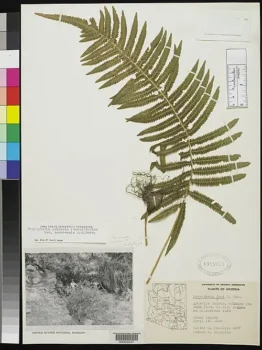
Showy Maiden Fern: A Mysterious Native Fern Worth Knowing
Meet the showy maiden fern (Thelypteris puberula), a native fern that’s something of an enigma in the gardening world. While many ferns have become beloved garden staples, this particular species flies under the radar – and there might be good reasons for that.
What Exactly Is Showy Maiden Fern?
Thelypteris puberula is a perennial fern native to the lower 48 United States, specifically found in Arizona and California. Unlike the woody shrubs and trees that dominate many landscapes, this fern falls into the category of forbs – plants without significant woody tissue that keep their growing points at or below ground level.
The geographical distribution of this fern is quite limited, being documented only in Arizona and California, suggesting it has very specific habitat requirements.
- Species observed
- No observations
The Water Connection
Here’s where things get interesting: showy maiden fern has different wetland preferences depending on where it grows. In the Arid West region, it’s considered a facultative wetland plant, meaning it usually hangs out in wet areas but can tolerate drier conditions. However, in the Western Mountains, Valleys, and Coast region, it’s classified as an obligate wetland species – essentially a moisture-loving fern that almost always needs wet feet.
This wetland preference gives us a big clue about where you might spot this fern in the wild and what it needs to thrive.
A Garden Mystery Plant
Here’s the thing about showy maiden fern – it’s remarkably elusive in cultivation. While native plant enthusiasts often seek out regional ferns for their gardens, Thelypteris puberula rarely appears in nurseries or garden centers. This could be due to several factors:
- Very specific growing requirements that are difficult to replicate in typical garden settings
- Limited natural distribution making it less commercially viable
- Possible taxonomic confusion with other similar fern species
Is It Right for Your Garden?
If you’re lucky enough to live in Arizona or California and have consistently moist to wet soil conditions, you might consider seeking out this native fern. However, given its mysterious nature and limited availability, you might want to explore other native fern alternatives that are easier to source and establish.
For gardeners interested in native ferns with similar wetland preferences, consider researching other Thelypteris species or native ferns in your specific region that are more readily available and better documented for cultivation.
The Bottom Line
Showy maiden fern represents one of those intriguing native plants that remind us how much we still have to learn about our local flora. While it may not be the easiest fern to incorporate into your garden, knowing about its existence helps us appreciate the diversity of native plants in our southwestern states.
If you’re passionate about native plant conservation and have the right conditions, keep an eye out for this elusive fern in the wild – just remember to observe and appreciate it in its natural habitat rather than disturbing it.