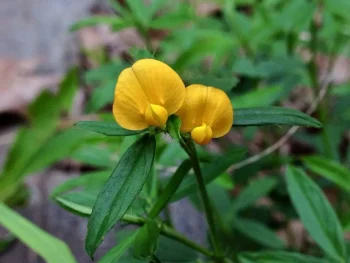
Sidebeak Pencilflower: A Delicate Native Wildflower for Low-Maintenance Gardens
If you’re looking for a charming native wildflower that won’t demand constant attention, meet the sidebeak pencilflower (Stylosanthes biflora). This unassuming little perennial might not win any flashy flower contests, but it’s got plenty of quiet charm and some serious ecological credentials that make it worth considering for your native plant garden.
What Makes Sidebeak Pencilflower Special?
Sidebeak pencilflower is a native perennial forb that’s perfectly at home across much of the eastern and central United States. As a member of the legume family, it has those characteristic pea-like flowers, though they’re quite small and delicate compared to their garden pea cousins. The plants typically stay low to the ground, making them excellent for naturalized areas where you want something that looks wild but not weedy.
Where You’ll Find It Growing Wild
This native beauty has quite an impressive range, naturally occurring across 27 states from the Southeast up through the Mid-Atlantic and extending west into the Great Plains. You can find it growing wild in Alabama, Arizona, Arkansas, Delaware, District of Columbia, Florida, Georgia, Illinois, Indiana, Kansas, Kentucky, Louisiana, Maryland, Mississippi, Missouri, New Jersey, New York, North Carolina, Ohio, Oklahoma, Pennsylvania, South Carolina, Tennessee, Texas, Virginia, West Virginia, and Wisconsin.
- Species observed
- No observations
A Word About Rarity
Here’s something important to know: while sidebeak pencilflower has a broad native range, it’s considered vulnerable in some areas. In New Jersey, for example, it has a rarity status of S3, meaning it’s at moderate risk. If you’re interested in growing this plant, please make sure to source it responsibly from reputable native plant nurseries rather than collecting from wild populations.
Why Your Garden (and Local Wildlife) Will Love It
Don’t let its modest appearance fool you – sidebeak pencilflower punches above its weight when it comes to supporting local ecosystems. Here’s what makes it a wildlife winner:
- Large mammals use it as a food source, making up 5-10% of their diet
- Birds also nibble on it, though more sparingly at 2-5% of their diet
- The small yellow flowers attract pollinators including native bees and butterflies
- As a legume, it helps fix nitrogen in the soil, benefiting neighboring plants
Perfect Garden Situations
Sidebeak pencilflower isn’t really a formal garden kind of plant – it’s much happier in more relaxed, naturalized settings. Consider it for:
- Native plant gardens and prairie restorations
- Wildflower meadows
- Ground cover in naturalized areas
- Butterfly gardens (as a supporting player rather than the star)
- Low-maintenance landscapes where you want native character
Growing Conditions That Make It Happy
One of the best things about sidebeak pencilflower is that it’s pretty easygoing about where it grows. It thrives in USDA hardiness zones 5-9, which covers most of its native range and then some. The plant prefers full sun to partial shade and well-drained soils, but it’s quite tolerant of poor soil conditions – a real plus if you’re dealing with challenging garden spots.
Once established, it’s quite drought tolerant, making it a smart choice for low-water gardens or areas that don’t get regular irrigation.
Planting and Care Tips
Here’s the refreshing truth about sidebeak pencilflower: it doesn’t need much fussing over. This low-maintenance native is pretty much a plant it and let it do its thing kind of wildflower.
- Plant in spring after the last frost, or start seeds indoors 6-8 weeks earlier
- Choose a spot with good drainage – soggy soil is about the only thing that really bothers this plant
- Water regularly during the first growing season to help establishment, then back off
- No need for fertilizer – remember, this is a legume that actually improves soil fertility
- Allow plants to self-seed if you want them to naturalize
- Minimal pruning needed – just remove dead material in late winter if desired
The Bottom Line
Sidebeak pencilflower might not be the showstopper of your garden, but it’s exactly the kind of reliable, beneficial native plant that forms the backbone of a healthy ecosystem. Its small yellow blooms provide subtle beauty from summer through fall, while its low-maintenance nature makes it perfect for gardeners who want to support local wildlife without adding to their weekend to-do list.
If you’re building a native plant garden or looking to add more ecological value to your landscape, sidebeak pencilflower deserves a spot on your list. Just remember to source it responsibly and give it the well-drained conditions it prefers. Your local pollinators – and the occasional passing deer – will thank you for it.