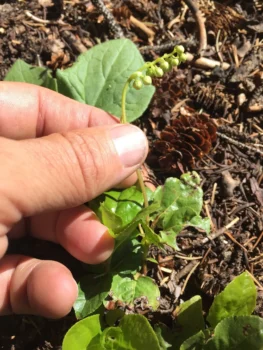
Sidebells Wintergreen: A Delicate Native Gem for Woodland Gardens
If you’re looking to add a touch of understated elegance to your shade garden, sidebells wintergreen (Orthilia secunda) might just be the perfect native plant you’ve been searching for. This charming little perennial brings a quiet beauty to woodland settings with its distinctive one-sided flower clusters and glossy evergreen leaves.
What Makes Sidebells Wintergreen Special
Sidebells wintergreen gets its common name from the way its small, bell-shaped flowers all hang gracefully to one side of the stem, creating an elegant curved arrangement. The creamy white to pale pink blooms appear in summer, standing out beautifully against the plant’s dark green, oval-shaped leaves that persist year-round.
This low-growing shrub typically stays under 1.5 feet tall, making it an excellent groundcover option for shady spots where many other plants struggle to thrive. Despite its delicate appearance, this hardy perennial has adapted to survive in some pretty tough climates!
Where Sidebells Wintergreen Calls Home
One of the most impressive things about sidebells wintergreen is just how widely it’s distributed across North America. This native plant can be found from Alaska all the way down to higher elevations in states like Arizona and New Mexico, and from coast to coast across Canada and the northern United States. It grows naturally in Alberta, British Columbia, Alaska, Manitoba, New Brunswick, Arizona, California, Nova Scotia, Ontario, Colorado, and many other states and provinces.
- Species observed
- No observations
However, there’s an important caveat for gardeners in New Jersey: sidebells wintergreen has a rarity status of S2 (Highlands Listed) in the state, meaning it’s quite uncommon there. If you’re in New Jersey and want to grow this plant, make sure you source it responsibly from reputable native plant nurseries rather than collecting it from the wild.
Why Gardeners Love (and Sometimes Struggle With) This Plant
Sidebells wintergreen offers several compelling reasons to include it in your garden:
- Native across much of North America, supporting local ecosystems
- Evergreen foliage provides year-round interest
- Unique flower arrangement creates visual appeal
- Excellent groundcover for challenging shady areas
- Attracts small pollinators like bees and flies
- Low maintenance once established
But let’s be honest – this isn’t the easiest plant to grow. Sidebells wintergreen has some specific requirements that can make it challenging for beginning gardeners or those without the right conditions.
Creating the Perfect Home for Sidebells Wintergreen
This woodland native thrives in conditions that mimic its natural forest habitat. Here’s what it needs to flourish:
Light and Location
Sidebells wintergreen prefers partial to full shade – think of the dappled light you’d find on a forest floor. It’s perfect for those spots in your yard where grass won’t grow and other plants look scraggly.
Soil Requirements
Like many woodland plants, sidebells wintergreen loves acidic soil. It also requires good drainage while maintaining consistent moisture – a bit of a balancing act! The plant forms important relationships with soil fungi (mycorrhizae), which help it absorb nutrients, so avoid disturbing the soil too much once it’s planted.
Hardiness and Climate
This tough little plant can handle USDA hardiness zones 2 through 7, making it suitable for most northern climates and higher elevation areas in warmer regions.
Water Needs
The wetland status varies by region, but generally, sidebells wintergreen prefers consistently moist (but not waterlogged) conditions. In some areas, it can tolerate occasional wet conditions, while in others it prefers well-drained upland sites.
Planting and Care Tips
Here’s where things get a bit tricky – sidebells wintergreen can be challenging to establish:
- Start with nursery-grown plants rather than attempting to transplant from the wild
- Plant in spring or early fall when temperatures are cool
- Amend heavy clay soils with organic matter to improve drainage
- Mulch around plants with natural materials like leaf mold or pine needles
- Be patient – this plant can be slow to establish but is long-lived once settled
- Avoid fertilizing, as this can disrupt the important fungal relationships
Perfect Garden Partners
Sidebells wintergreen fits beautifully into woodland gardens, shade gardens, and naturalized areas. It pairs well with other native woodland plants like wild ginger, trilliums, ferns, and native sedges. Consider it for rock gardens in shaded areas or as part of a native plant restoration project.
Supporting Wildlife
While small, the flowers of sidebells wintergreen provide nectar for various pollinators, particularly small bees and flies that are active in woodland environments. The plant also contributes to the overall health of forest ecosystems through its relationships with soil organisms.
Is Sidebells Wintergreen Right for Your Garden?
Sidebells wintergreen is an excellent choice for gardeners who:
- Have shady areas that need groundcover
- Want to support native plant ecosystems
- Appreciate subtle, woodland beauty
- Are willing to provide specific growing conditions
- Have patience for slow-to-establish plants
However, you might want to consider other options if you’re looking for fast results, have very wet or very dry conditions, or prefer low-maintenance plants that thrive in any soil.
For those willing to meet its needs, sidebells wintergreen rewards gardeners with years of quiet beauty and the satisfaction of growing a truly native plant that supports local ecosystems. Just remember – if you’re in New Jersey or other areas where it might be rare, always source your plants responsibly!