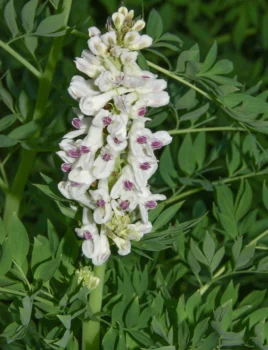
Sierra Fumewort: A Rare Utah Native Worth Protecting
Meet Sierra fumewort (Corydalis caseana brachycarpa), a fascinating native perennial that’s as elusive as it sounds. This little-known member of the fumitory family represents one of those special plants that makes you appreciate the incredible diversity hiding in our native landscapes—even if most of us will never encounter it in the wild.
What Makes Sierra Fumewort Special
Sierra fumewort is a herbaceous perennial forb, which is botanical speak for a non-woody flowering plant that comes back year after year. Unlike its showier garden cousins, this native beauty has adapted to life in very specific conditions, making it a true specialist of the American West.
Where You’ll Find It (Or Won’t)
Here’s where things get interesting: Sierra fumewort is currently documented only in Utah, making it one of those plants that really knows what it likes and isn’t interested in compromising. This extremely limited geographic distribution is part of what makes this species so noteworthy from a conservation perspective.
- Species observed
- No observations
A Plant Shrouded in Mystery
If you’re hoping to learn all about Sierra fumewort’s growing requirements and garden potential, you might be disappointed. This subspecies is so specialized and rare that detailed cultivation information simply isn’t available. Sometimes the plant world keeps its secrets, and Sierra fumewort appears to be one of those well-guarded mysteries.
What we do know is that it’s a perennial that has evolved specifically for its Utah habitat, suggesting it has very particular needs that would be challenging to replicate in a typical garden setting.
Conservation Concerns
Sierra fumewort carries a Global Conservation Status of S5T2, indicating it’s quite rare. This rarity status should give any plant enthusiast pause. When a plant has such a limited range and specific habitat requirements, it’s often best appreciated from a distance rather than moved into our gardens.
If you’re absolutely determined to grow Sierra fumewort, the golden rule applies: only obtain plants or seeds from reputable, ethical sources that practice responsible collection methods. Never collect from wild populations, as this could harm already vulnerable communities of this rare plant.
Better Alternatives for Your Garden
Instead of seeking out this rare species, consider exploring other members of the Corydalis genus that are better suited to cultivation and more readily available. Many Corydalis species offer delicate, intricate flowers and interesting foliage without the conservation concerns.
For Utah gardeners specifically, focusing on other native plants that are more common and better understood for garden use would be a more sustainable choice. Your local native plant society or extension office can point you toward beautiful, appropriate alternatives that will thrive in your specific conditions.
The Takeaway
Sierra fumewort serves as a reminder that not every native plant is destined for our garden beds—and that’s perfectly okay. Some plants are meant to remain wild, thriving in their specialized habitats where they’ve spent millennia perfecting their survival strategies. Sometimes the best way to appreciate a rare native plant is to support its conservation in the wild rather than trying to bring it home.
For those of us passionate about native gardening, Sierra fumewort represents the importance of understanding our local ecosystems and choosing plants that are not only appropriate for our gardens but also ethically sourced and ecologically responsible.