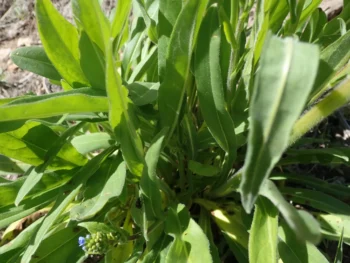
Sierra Stickseed: A Hidden Gem for Western Native Gardens
If you’re looking to add some authentic western charm to your native garden, Sierra stickseed (Hackelia nervosa) might just be the understated beauty you’ve been searching for. This charming biennial wildflower brings a touch of mountain meadow magic to cultivation, though it’s definitely more of a specialty plant than your typical garden center find.
What Makes Sierra Stickseed Special
Sierra stickseed is a true western native, calling the mountainous regions of California and Nevada home. As a member of the borage family, this herbaceous forb produces delicate clusters of small blue flowers that add a soft, naturalistic touch to any planting. The plant gets its stickseed name from its burr-like seeds that can attach to clothing or animal fur – nature’s clever way of spreading the species around.
This biennial completes its life cycle over two growing seasons, typically forming a rosette of leaves in its first year before sending up flowering stems in its second year. As a forb, it lacks woody stems but makes up for it with its authentic wildflower appeal.
Where You’ll Find It Growing Wild
Sierra stickseed naturally grows in California and Nevada, where it thrives in mountain meadows and forest openings. This limited geographic range makes it a particularly special addition to gardens in these regions.
- Species observed
- No observations
A Note About Rarity
Here’s something important to keep in mind: Sierra stickseed has a conservation status of S3S4, which suggests it may face some population pressures in the wild. If you’re interested in growing this lovely native, make sure you source your seeds or plants from reputable native plant nurseries that practice responsible propagation. Never collect from wild populations.
Garden Role and Design Ideas
Sierra stickseed shines in:
- Native wildflower meadows
- Naturalistic landscape designs
- Mountain-themed gardens
- Areas where you want to recreate authentic local ecosystems
This isn’t a plant for formal borders or high-maintenance landscapes. Instead, think of it as a supporting player in a more natural setting where its subtle beauty can be appreciated alongside other native wildflowers.
Growing Conditions and Care
While specific cultivation information for Sierra stickseed is limited (it’s not exactly a mainstream garden plant!), we can make educated guesses based on its natural habitat:
- Likely prefers well-draining soil, similar to mountain meadow conditions
- Probably enjoys full sun to partial shade
- As a mountain native, it should be fairly cold-hardy
- Being a biennial, expect flowers in the second year after planting
Given its California and Nevada origins, Sierra stickseed is likely suited for USDA hardiness zones 6-9, though this is an educated estimate based on its geographic range.
Wildlife and Pollinator Benefits
Like many members of the borage family, Sierra stickseed likely provides nectar for various pollinators, particularly smaller native bees. The seeds may also provide food for birds, though specific wildlife relationships for this species aren’t well-documented.
Should You Grow Sierra Stickseed?
Sierra stickseed is definitely a plant for the dedicated native garden enthusiast rather than the casual gardener. If you live in California or Nevada and are creating a native landscape that celebrates local flora, this could be a wonderful addition – provided you can source it responsibly.
Keep in mind that as a biennial with limited cultivation information, it might be a bit of an adventure to grow. But for those who love experimenting with lesser-known natives and supporting local plant diversity, Sierra stickseed offers the satisfaction of growing something truly special and region-appropriate.
Just remember: always source from responsible suppliers, never collect from the wild, and consider this plant as part of a broader native landscaping effort rather than a standalone specimen.