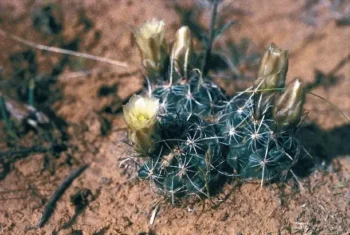
Siler Fishhook Cactus: A Rare Desert Gem Worth Protecting
Meet the Siler fishhook cactus (Sclerocactus sileri), a small but mighty desert dweller that’s become one of the rarest cacti in North America. This little barrel cactus might not win any height contests, but what it lacks in stature, it makes up for in character—and conservation importance.
What Makes This Cactus Special?
The Siler fishhook cactus is a compact perennial that stays refreshingly manageable, typically reaching just 1.5 feet tall and never exceeding 3 feet at maturity. Don’t let its size fool you though—this low-growing shrub packs a visual punch with its distinctive barrel shape and formidable array of hooked spines that give it its common name.
Come springtime, this desert beauty puts on quite a show with stunning pink to magenta flowers that seem almost too vibrant for such an arid landscape. It’s like nature’s way of saying, Good things really do come in small packages!
Where Does It Call Home?
This native treasure is found exclusively in the Mojave Desert region, calling three states home: Arizona, Nevada, and Utah. Its natural range is quite limited, which brings us to an important point about this special cactus.
- Species observed
- No observations
A Word of Caution: Rarity Matters
Here’s where things get serious, folks. The Siler fishhook cactus has a Global Conservation Status of S1, meaning it’s critically imperiled. With typically 5 or fewer occurrences and fewer than 1,000 remaining individuals in the wild, this little guy is hanging on by a thread.
What this means for gardeners: While we absolutely encourage celebrating and growing native plants, this particular species requires extra responsibility. If you’re considering adding a Siler fishhook cactus to your collection, please ensure you’re obtaining it from a reputable, legally operating nursery that propagates plants responsibly—never from wild collection.
Garden Role and Design Ideas
For those lucky enough to obtain a responsibly sourced specimen, the Siler fishhook cactus makes an excellent:
- Focal point in desert or xeriscape gardens
- Specimen plant in rock gardens
- Addition to specialized cactus collections
- Conservation showcase plant
Its compact size makes it perfect for small spaces, and its unique form adds textural interest to desert landscapes.
Growing Conditions and Care
If you’re in USDA hardiness zones 8b through 10a, you might be able to grow this desert native outdoors. Here’s what it needs to thrive:
- Sunlight: Full sun exposure
- Soil: Extremely well-draining sandy or gravelly soil
- Water: Minimal—drought tolerance is its superpower
- Temperature: Protection from freezing temperatures
Planting and Care Tips
The golden rule with Siler fishhook cactus? When in doubt, don’t water. This desert specialist is far more likely to suffer from too much love (in the form of water) than too little. Here are some key care points:
- Ensure drainage is absolutely perfect—standing water is a death sentence
- Plant in a raised bed or mounded soil if your area has drainage issues
- Protect from freezing temperatures with frost cloth if needed
- Avoid fertilizing—these plants are adapted to poor soils
Supporting Conservation
The Siler fishhook cactus attracts native bees and other desert pollinators with its beautiful spring blooms, making it a valuable part of desert ecosystems. By growing this species responsibly, you’re not just adding a unique plant to your garden—you’re participating in conservation efforts.
Consider supporting organizations that work to protect desert habitats and rare plant species. Sometimes the best way to help a rare plant is to protect its wild home while appreciating it from a respectful distance.
The Bottom Line
The Siler fishhook cactus is undoubtedly a fascinating and beautiful native plant, but its critically imperiled status means it’s not for every gardener. If you do choose to grow one, make sure you’re doing so responsibly and as part of broader conservation efforts. For most desert gardeners, there are many other wonderful native cacti that can provide similar aesthetic appeal without the conservation concerns.
Remember: the rarest plants are often the most precious, and sometimes the best way to love them is to let them be wild and work to protect their natural habitats.