Silky Dogwood: A Native Beauty for Wet Spots and Wildlife
If you’ve been scratching your head over what to plant in that perpetually soggy corner of your yard, meet your new best friend: silky dogwood (Cornus obliqua). This native North American shrub doesn’t just tolerate wet feet – it absolutely thrives in them! But before you rush out to plant one, there’s an important conservation note we need to discuss.
A Special Conservation Concern
While silky dogwood grows across much of eastern and central North America, it’s become quite rare in some areas. In New Jersey, this lovely shrub is listed as endangered with an S1 rarity status, meaning it’s critically imperiled in that state. If you live in New Jersey or other areas where silky dogwood is rare, please only purchase plants from reputable native plant nurseries that use responsibly sourced, locally appropriate genetic material. Better yet, consider supporting local conservation efforts that are working to restore this species in the wild.
Where Silky Dogwood Calls Home
This adaptable shrub naturally ranges from southeastern Canada down to northern Florida and stretches west to eastern Kansas. You’ll find it growing wild across an impressive list of states and provinces, including Arkansas, Connecticut, Illinois, Indiana, Iowa, Kansas, Kentucky, Maine, Maryland, Massachusetts, Michigan, Minnesota, Missouri, Nebraska, New Hampshire, New Jersey, New York, North Dakota, Ohio, Oklahoma, Pennsylvania, Rhode Island, South Dakota, Vermont, Virginia, West Virginia, Wisconsin, Ontario, Quebec, and New Brunswick.
- Species observed
- No observations
What Makes Silky Dogwood Special
Don’t let the name fool you – while the leaves do have a silky feel thanks to their fine hairs, this shrub offers so much more than interesting texture. Silky dogwood is a multi-stemmed perennial that typically stays under 13-16 feet tall, making it perfect for most residential landscapes.
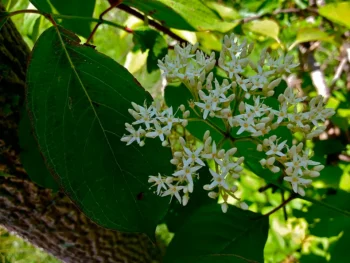
The real show begins in late spring when clusters of small, creamy white flowers appear in flat-topped arrangements. These aren’t just pretty to look at – they’re absolute magnets for pollinators including bees, butterflies, and a whole host of beneficial insects that will thank you for the feast.
Come fall, the flowers transform into blue-white berries that birds go crazy for, while the leaves put on their own autumn display with lovely reddish hues.
Perfect for Problem Areas
Here’s where silky dogwood really shines: it’s what botanists call a facultative wetland plant across all regions where it grows. In plain English, this means it usually loves wet spots but can handle drier conditions too. This makes it absolutely perfect for:
- Rain gardens that collect runoff
- Low-lying areas that stay soggy
- Spots near downspouts or drainage areas
- Natural areas you want to restore
- Erosion-prone slopes that need stabilizing
Growing Your Silky Dogwood Successfully
The beauty of silky dogwood lies in its easy-going nature. Hardy in USDA zones 4-8, this shrub adapts to a wide range of conditions once you understand its preferences.
Light: While it can handle full sun, silky dogwood often performs best with partial shade, especially in hotter climates.
Soil: Moist to wet soils are ideal, though it will tolerate periodic flooding – perfect for those challenging wet spots where other plants struggle.
Planting: Spring or fall are the best times to plant. Dig a hole twice as wide as the root ball but no deeper, and mulch around the base to retain moisture.
Care: Once established, silky dogwood is refreshingly low-maintenance. Water regularly the first year, then let nature take its course. If pruning is needed, do it in late winter before new growth begins.
Design Ideas and Garden Companions
Silky dogwood works beautifully in naturalized settings where you want that wild look without the chaos. It’s fantastic for woodland edge plantings, native plant gardens, and anywhere you want to create habitat for local wildlife.
Consider pairing it with other moisture-loving natives like cardinal flower, swamp milkweed, or native sedges for a stunning wetland garden that practically takes care of itself.
The Wildlife Connection
Beyond its pollinator appeal, silky dogwood serves as an important food source for birds and small mammals. The berries feed everything from songbirds to small mammals, while the dense branching structure provides nesting sites and cover.
Is Silky Dogwood Right for Your Garden?
If you have a wet or periodically soggy area that’s been giving you gardening headaches, silky dogwood might just be your solution. It’s native, supports local wildlife, requires minimal care once established, and adds multi-season interest to your landscape.
Just remember – if you’re in an area where this plant is rare, source it responsibly and consider it a small but meaningful contribution to conservation. Every native plant we grow in our gardens helps support the web of life that makes our local ecosystems so special.