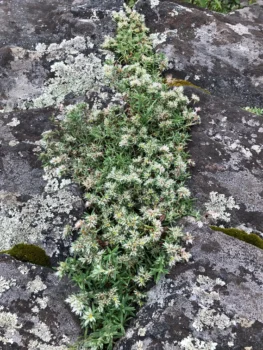
Silvery Nailwort: A Sparkling Native Ground Cover for Challenging Spots
If you’re searching for a tough, low-maintenance ground cover that adds a touch of silvery sparkle to your garden, meet silvery nailwort (Paronychia argyrocoma). This charming native perennial might not be the showiest plant in your garden, but it’s certainly one of the most resilient—and it brings a subtle beauty that grows on you over time.
What Makes Silvery Nailwort Special?
Silvery nailwort is a native perennial forb that forms dense, low-growing mats or cushions. What really catches the eye are its distinctive silvery-white, papery bracts that shimmer in the sunlight, giving the plant an almost ethereal quality. Don’t expect towering height from this humble ground-hugger—it stays close to the earth, making it perfect for tucking into rock crevices or carpeting difficult slopes.
As a member of the pink family (Caryophyllaceae), this little plant produces small, inconspicuous flowers, but it’s really all about those eye-catching silvery bracts that give it both its common name and its garden appeal.
Where Does Silvery Nailwort Call Home?
This eastern North American native has quite an impressive range, growing naturally across twelve states and the District of Columbia: Georgia, Kentucky, Maine, Maryland, Massachusetts, New Hampshire, North Carolina, Tennessee, Vermont, Virginia, and West Virginia. You’ll typically find it thriving in mountainous regions, particularly throughout the Appalachian Mountains, where it has adapted to challenging rocky and sandy conditions.
- Species observed
- No observations
Why Consider Silvery Nailwort for Your Garden?
Here’s where silvery nailwort really shines—it’s the perfect solution for those tricky spots in your garden where other plants struggle:
- Excellent for problem areas: Thrives in poor, rocky, or sandy soils where many other plants fail
- Low water needs: Once established, it’s quite drought tolerant
- Native plant benefits: Supports local ecosystems and requires minimal inputs
- Erosion control: Those dense mats help stabilize slopes and prevent soil loss
- Unique texture: Adds an interesting silvery element to plant combinations
Perfect Garden Situations
Silvery nailwort isn’t meant for every garden spot, but when you have the right conditions, it’s absolutely perfect:
- Rock gardens and alpine plantings
- Native plant gardens focused on eastern flora
- Xerophytic or drought-tolerant landscapes
- Slopes that need erosion control
- Areas with poor, well-draining soil
Growing Silvery Nailwort Successfully
The secret to success with silvery nailwort is understanding that it’s adapted to tough conditions—and actually prefers them!
Ideal Growing Conditions:
- Soil: Well-draining, sandy, or rocky soil; avoid rich, moisture-retentive soils
- Light: Full sun to partial shade
- Water: Low to moderate; drought tolerant once established
- Hardiness: Zones 3-8
Planting and Care Tips:
- Ensure excellent drainage—this is absolutely critical for success
- Avoid overwatering, especially in heavy soils
- Plant in spring or early fall
- Once established, it requires minimal care
- No fertilization needed—it actually prefers poor soils
A Word About Conservation
While silvery nailwort isn’t listed as invasive or problematic, it does have a somewhat unclear conservation status. If you’re interested in growing this plant, make sure to source it from reputable native plant nurseries that practice responsible propagation methods. This helps ensure you’re not impacting wild populations while still enjoying this lovely native in your garden.
The Bottom Line
Silvery nailwort might not be the star of your garden show, but it’s definitely a reliable supporting actor. If you have challenging growing conditions—poor soil, slopes that need stabilizing, or areas where you want a low-maintenance native ground cover—this sparkling little plant could be exactly what you need. Just remember: good drainage is non-negotiable, and sometimes the most beautiful gardens are built on plants that know how to thrive where others simply can’t.