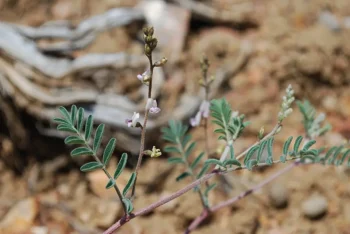
Skiff Milkvetch: A Rare Colorado Native Worth Protecting
Meet the skiff milkvetch (Astragalus microcymbus), one of Colorado’s most precious botanical treasures. This perennial native plant might not be showing up at your local garden center anytime soon – and for good reason. This little-known milkvetch holds the distinction of being one of the rarest plants in the American West.
A Plant on the Edge
Before we dive into the details, here’s something every gardener should know: skiff milkvetch carries a Global Conservation Status of S1, meaning it’s critically imperiled. With typically five or fewer known occurrences and very few remaining individuals (fewer than 1,000), this plant is dancing dangerously close to extinction. This isn’t a plant you’ll want to dig up from the wild or purchase from questionable sources.
Where in the World?
Skiff milkvetch calls Colorado home – and only Colorado. This endemic species has an extremely limited native range within the state, making it a true local specialty. Its restricted distribution is part of what makes it so vulnerable to environmental changes and human impacts.
- Species observed
- No observations
What Makes It Special?
As a member of the milkvetch family, skiff milkvetch shares the characteristic compound leaves and pea-like flowers that make Astragalus species recognizable. However, specific details about its appearance, size, and flowering characteristics remain largely undocumented in accessible literature – a testament to just how rare and understudied this species is.
Should You Plant It?
Here’s the short answer: probably not. Given its critically imperiled status, skiff milkvetch should only be cultivated by conservation professionals or serious botanists working with responsibly sourced, legally obtained materials. This isn’t about being a plant snob – it’s about species survival.
If you’re drawn to the idea of growing native Colorado milkvetches, consider these more common alternatives:
- Purple milkvetch (Astragalus purpureus)
- Ground plum milkvetch (Astragalus crassicarpus)
- Canadian milkvetch (Astragalus canadensis)
The Conservation Connection
Why does this matter to home gardeners? Every rare plant species represents irreplaceable genetic diversity and ecological relationships that took millions of years to develop. When we lose species like skiff milkvetch, we lose potential medicines, unique adaptations to environmental challenges, and intricate connections within ecosystems.
How You Can Help
While you might not be able to grow skiff milkvetch in your backyard, you can still support its conservation:
- Support organizations working to protect Colorado’s rare plants
- Choose native plants for your landscape to support local ecosystems
- Learn to identify and report rare plant sightings to local botanists
- Practice responsible wildland recreation in Colorado’s natural areas
The Bigger Picture
Skiff milkvetch reminds us that not every native plant is meant for our gardens – and that’s perfectly okay. Sometimes the best thing we can do for a species is to appreciate it from afar and work to protect its natural habitat. By understanding and respecting these botanical rarities, we become better stewards of the incredible plant diversity that surrounds us.
So while skiff milkvetch might not be gracing your garden beds anytime soon, it serves as an important reminder of the fragile beauty hidden in Colorado’s landscapes and the responsibility we all share in protecting it for future generations.