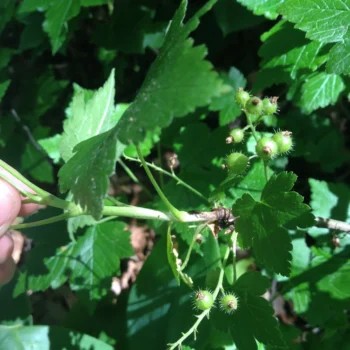
Skunk Currant: A Hidden Gem for Woodland Gardens
Don’t let the name fool you – skunk currant (Ribes glandulosum) doesn’t actually smell bad! This charming native shrub gets its quirky common name from the musky scent of its leaves when crushed, but in the garden, it’s nothing but delightful. If you’re looking for a low-maintenance groundcover that thrives in those tricky shaded, moist spots where other plants struggle, skunk currant might just be your new best friend.
What Makes Skunk Currant Special?
Skunk currant is a perennial shrub that typically stays nice and compact, rarely growing taller than 3-4 feet. What it lacks in height, it makes up for in character. The distinctive maple-like leaves create an attractive carpet of green throughout the growing season, turning lovely shades of yellow and orange in fall. In late spring, small clusters of greenish flowers appear, followed by bright red berries that add a pop of color to the summer garden.
Where Does It Come From?
This hardy native has an impressive range across North America. You’ll find skunk currant growing naturally from Alaska all the way across Canada, and south into many northern U.S. states including Maine, Vermont, New Hampshire, Massachusetts, New York, Pennsylvania, and extending as far south as North Carolina and Tennessee in mountainous areas. It’s also found in the upper Midwest and Great Lakes region.
- Species observed
- No observations
Important note for New Jersey gardeners: Skunk currant is listed as endangered in New Jersey with a rarity status of S1.1. If you’re in the Garden State and want to grow this plant, please source it only from reputable native plant nurseries that use responsibly collected or propagated material.
Perfect Spots for Skunk Currant
Skunk currant is particularly well-suited for:
- Woodland gardens and forest edges
- Rain gardens and bioswales
- Slopes needing erosion control
- Naturalized landscapes
- Areas with consistent moisture
Its wetland status varies by region, but it generally thrives in moist to wet conditions, making it an excellent choice for those challenging soggy spots in your yard.
Growing Conditions and Care
One of the best things about skunk currant is how easy-going it is. Here’s what it needs to thrive:
Light: Partial to full shade – perfect for those areas under trees where sun-loving plants won’t grow
Soil: Moist to wet, organic-rich soil with good drainage. It adapts to various soil types but prefers slightly acidic conditions
Climate: Hardy in USDA zones 2-6, this tough little shrub can handle some seriously cold winters
Water: Consistent moisture is key – think forest floor conditions
Planting and Care Tips
Getting skunk currant established is straightforward:
- Plant in spring or fall when temperatures are moderate
- Dig a hole twice as wide as the root ball but no deeper
- Apply a 2-3 inch layer of organic mulch to retain moisture and suppress weeds
- Water regularly during the first growing season to establish roots
- Minimal pruning needed – just remove any dead or damaged stems in late winter
Wildlife and Pollinator Benefits
While small, the flowers of skunk currant provide valuable nectar for native bees and flies during the early spring when few other blooms are available. The berries that follow are enjoyed by various bird species, making this plant a nice addition to wildlife-friendly gardens.
The Bottom Line
Skunk currant is an excellent choice for gardeners looking to add native plants to challenging shaded, moist areas. Its low-maintenance nature, attractive foliage, and wildlife benefits make it a valuable addition to woodland and naturalized gardens. Just remember to source plants responsibly, especially if you’re gardening in areas where it’s considered rare. With proper placement and minimal care, skunk currant will reward you with years of quiet beauty in your landscape.