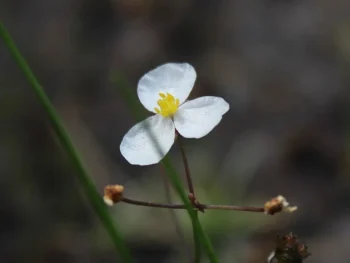
Slender Arrowhead: A Rare Native Gem for Your Wetland Garden
Meet the slender arrowhead (Sagittaria teres), a delicate native beauty that’s flying under the radar in most gardening circles. This charming perennial might not have the showiness of its more famous cousins, but it brings something special to wetland gardens: authentic regional character and important ecological value.
What Makes Slender Arrowhead Special?
Unlike the broad-leaved arrowheads you might know, slender arrowhead lives up to its name with narrow, grass-like leaves that create an elegant, understated presence. This herbaceous perennial produces small white flowers that may seem modest at first glance, but they’re perfectly designed to attract pollinators and add subtle beauty to water features.
As a native species to the lower 48 states, slender arrowhead has been quietly supporting local ecosystems for centuries. However, this plant comes with an important conservation story that every gardener should know.
A Plant That Needs Our Help
Here’s where things get serious: slender arrowhead is considered vulnerable globally and is actually listed as endangered in New Jersey. With only 21 to 100 known occurrences worldwide, this isn’t just another garden plant—it’s a species that needs thoughtful conservation.
If you’re interested in growing slender arrowhead, please only purchase from reputable native plant nurseries that ethically propagate their stock. Never collect plants from the wild, as this could harm already fragile populations.
Where Does It Grow?
Slender arrowhead naturally occurs in a limited range across the northeastern United States, including Maryland, Massachusetts, New Jersey, New York, and Rhode Island. It’s adapted to the specific conditions of this region’s wetlands and coastal areas.
- Species observed
- No observations
The Perfect Wetland Plant
This species is what botanists call an obligate wetland plant, meaning it almost always occurs in wetland conditions. That makes it absolutely perfect for:
- Rain gardens and bioswales
- Pond margins and water garden edges
- Bog gardens
- Wetland restoration projects
- Native plant gardens in consistently moist areas
Growing Conditions
Slender arrowhead thrives in USDA hardiness zones 4-9, making it suitable for much of the temperate United States. Here’s what this water-loving plant needs to flourish:
- Light: Full sun to partial shade
- Soil: Consistently moist to wet soils
- Water: Requires constant moisture; can tolerate seasonal flooding
- pH: Adapts to various soil pH levels typical of wetland environments
Planting and Care Tips
Growing slender arrowhead successfully is all about recreating its natural wetland habitat:
- Plant in spring after the last frost date
- Choose the lowest, moistest spot in your garden
- Can be grown in containers submerged in water features
- Mulch around plants to help retain moisture
- No fertilization needed—wetland plants are adapted to nutrient-poor conditions
- Allow natural die-back in winter; new growth emerges in spring
Wildlife and Pollinator Benefits
While slender arrowhead’s flowers are small, they’re valuable to pollinators, particularly smaller bees and beneficial insects that might overlook showier blooms. As a native wetland plant, it also provides habitat structure for various wildlife species and contributes to the complex ecosystem relationships that make wetlands so biologically rich.
Should You Grow Slender Arrowhead?
If you have a wetland garden, pond, or consistently moist area in your landscape, and you’re committed to conservation gardening, slender arrowhead could be a meaningful addition to your plant palette. Just remember:
- Only purchase from ethical sources that propagate rather than wild-collect
- You’re helping preserve a vulnerable species
- It’s perfect for naturalistic, low-maintenance wetland gardens
- You’ll be supporting local pollinators with a plant they co-evolved with
While slender arrowhead might not be the star of your garden show, it represents something increasingly rare: a chance to grow a plant that’s both beautiful and conservation-significant. In a world where many native species are struggling, giving this modest beauty a home in your wetland garden is both a gardening choice and a conservation act.