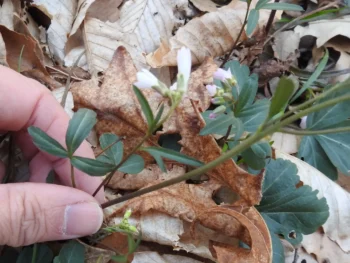
Slender Toothwort: A Delicate Native Spring Ephemeral for Your Shade Garden
If you’re looking to add some early spring magic to your woodland garden, slender toothwort (Cardamine angustata) might just be the charming native plant you’ve been searching for. This delicate perennial forb brings a touch of woodland whimsy to shady corners with its dainty white flowers and finely divided leaves.
Meet the Slender Toothwort
Slender toothwort is a native North American perennial that belongs to the mustard family. Don’t let the toothwort name fool you – it’s not actually related to dental care! The name comes from the plant’s tooth-like root segments. This woodland wildflower is what botanists call a spring ephemeral, meaning it puts on its show early in the season before retreating into summer dormancy.
Where Does It Call Home?
This native beauty has quite an impressive range across the eastern United States. You’ll find slender toothwort naturally growing in Alabama, Arkansas, Delaware, District of Columbia, Georgia, Indiana, Kentucky, Maryland, Mississippi, New Jersey, North Carolina, Ohio, Oklahoma, Pennsylvania, South Carolina, Tennessee, Virginia, and West Virginia.
- Species observed
- No observations
A Word About Conservation
Before you rush out to find some slender toothwort, there’s something important to know. This plant has varying conservation status depending on where you live. In Arkansas, it’s considered quite rare (S2 status), and in New Jersey, it’s listed as a Highlands species with S3 status. If you’re planning to add this beauty to your garden, please make sure you source it responsibly from reputable native plant nurseries rather than wild-collecting.
What Makes It Garden-Worthy?
Slender toothwort brings several delightful qualities to the garden:
- Early blooms: Pure white, four-petaled flowers appear in early spring when little else is blooming
- Attractive foliage: Deeply divided, compound leaves add fine texture to the woodland floor
- Pollinator magnet: Early-season nectar source for small native pollinators and butterflies
- Low maintenance: Once established, it pretty much takes care of itself
- Native credentials: Supports local ecosystems and wildlife
Perfect Garden Spots
This woodland native is tailor-made for shade gardens and naturalized areas. It’s particularly at home in:
- Woodland gardens under deciduous trees
- Native plant gardens
- Shaded rock gardens
- Natural areas you’re trying to restore
- Spring ephemeral collections
Growing Conditions That Make It Happy
Slender toothwort isn’t too fussy, but it does have some preferences:
- Light: Partial to full shade (it appreciates some spring sun before trees leaf out)
- Soil: Moist, well-draining soil rich in organic matter
- Water: Consistent moisture in spring, can tolerate drier conditions when dormant
- Climate: Thrives in USDA hardiness zones 4-8
Interestingly, slender toothwort has different wetland preferences depending on your region. In some areas, it’s equally happy in wet or dry spots (facultative), while in others, it prefers drier upland conditions.
Planting and Care Tips
The good news is that slender toothwort is refreshingly low-maintenance once you get it established:
- Planting time: Fall is ideal for planting, allowing roots to establish before spring growth
- Soil prep: Work some compost or leaf mold into the planting area
- Spacing: Plant about 6-12 inches apart for naturalized look
- Watering: Keep consistently moist through the growing season
- Summer care: Don’t panic when it goes dormant – this is totally normal!
- Propagation: Can spread slowly by root division or self-seeding
Setting Realistic Expectations
Here’s what you should know before planting: slender toothwort is a spring ephemeral, which means it completes most of its annual cycle early in the year. You’ll get beautiful flowers and foliage from early to late spring, but don’t expect it to provide summer-long interest. The plant typically goes dormant as temperatures rise and tree canopies fill in.
This isn’t necessarily a drawback – it just means you’ll want to pair it with other plants that can take over the show later in the season. Ferns, wild ginger, or other woodland perennials make excellent companions.
The Bottom Line
Slender toothwort is a lovely choice for gardeners who want to support native ecosystems while adding early spring beauty to shaded areas. Just remember to source your plants responsibly, especially if you’re in an area where it’s considered rare. With minimal care requirements and maximum charm, this delicate woodland wildflower can be a delightful addition to the right garden setting.
While it may not be the showiest plant in your garden, slender toothwort offers something special – that quiet, understated beauty that makes you stop and appreciate the smaller wonders of the natural world.