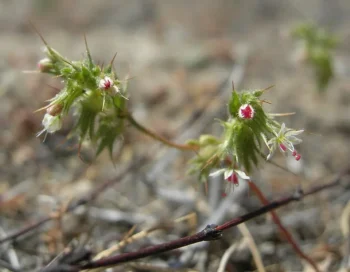
Slenderhorn Spineflower: California’s Critically Endangered Native Beauty
If you’re passionate about native plants and conservation, you may have heard whispers about the slenderhorn spineflower (Dodecahema leptoceras). This tiny California native is one of the rarest plants in North America, and there’s a compelling story behind why this delicate annual deserves our attention – even if most of us will never grow it in our gardens.
What Is Slenderhorn Spineflower?
The slenderhorn spineflower is a small annual forb – basically a soft-stemmed herbaceous plant that completes its entire life cycle in one growing season. Don’t let its diminutive size fool you; this plant packs a lot of ecological importance into its modest frame. As a member of the buckwheat family, it produces tiny clusters of whitish to pale pink flowers that may seem unremarkable at first glance, but represent millions of years of evolution perfectly adapted to Southern California’s unique environment.
Where Does It Call Home?
This California endemic is found only in Riverside and San Bernardino counties, making it one of the most geographically restricted plants in the United States. The slenderhorn spineflower has evolved to thrive in the sandy washes and alluvial fans of Southern California’s inland valleys – a very specific habitat that’s rapidly disappearing due to urban development.
- Species observed
- No observations
Why This Plant Matters (And Why You Probably Shouldn’t Grow It)
Here’s where things get serious: the slenderhorn spineflower carries a Global Conservation Status of S1, meaning it’s critically imperiled. It’s also listed as federally endangered. With typically fewer than five known populations and less than 1,000 individuals remaining in the wild, every single plant matters for the species’ survival.
While the idea of growing this rare beauty might be tempting for dedicated native plant enthusiasts, the reality is that cultivation should be left to professional botanists and authorized conservation programs. This isn’t just about legality (though collecting from wild populations is illegal) – it’s about ensuring that conservation efforts focus on protecting existing habitat rather than removing plants from their natural environment.
Growing Conditions: Why It’s So Challenging
Even if you could obtain seeds through proper channels, the slenderhorn spineflower is notoriously difficult to cultivate. This plant has evolved very specific requirements:
- Extremely well-draining sandy soils that mimic alluvial deposits
- Precise moisture conditions – enough winter rain to germinate, but dry summers
- USDA hardiness zones 9-10 with Southern California’s unique climate patterns
- Specific soil chemistry found in its native washes
These exacting requirements explain why the plant struggles outside its natural habitat and why conservation efforts focus on habitat preservation rather than cultivation.
Supporting Conservation Instead
Rather than attempting to grow this endangered species, consider these meaningful alternatives:
- Support organizations working to protect California’s remaining native habitats
- Plant other members of the buckwheat family that aren’t endangered, such as California buckwheat (Eriogonum fasciculatum)
- Create native plant gardens using locally appropriate, non-endangered species
- Volunteer with habitat restoration projects in your area
The Bigger Picture
The slenderhorn spineflower serves as a powerful reminder of what we stand to lose when natural habitats disappear. While most of us will never see this plant in person, its story highlights the importance of protecting the native plant communities that remain. Every time we choose native plants for our gardens – even common ones – we’re supporting the broader ecosystem that rare species like the slenderhorn spineflower depend on.
Sometimes the most meaningful way to honor a rare plant is to admire it from afar and work to ensure it has a future in its natural home. The slenderhorn spineflower may be small, but its conservation story is mighty – and that’s something worth celebrating in our native plant journey.