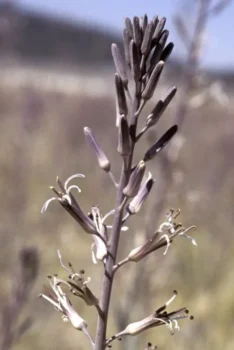
Slenderpetal Thelypody: A Rare California Native Worth Protecting (But Not Planting)
Meet the slenderpetal thelypody (Thelypodium stenopetalum), one of California’s most endangered wildflowers. While this modest member of the mustard family might not win any beauty contests, it holds a special place in the Golden State’s botanical heritage – and that’s exactly why you probably shouldn’t try to grow it in your garden.
What Makes This Plant Special?
The slenderpetal thelypody is a biennial forb, meaning it completes its life cycle over two years and lacks woody stems. Like other members of the mustard family, it produces small clusters of white to pale yellow flowers with characteristically narrow petals that give the plant its common name. As a native California species, it has evolved specifically for the state’s unique alkali flats and saline soil conditions.
A Plant on the Brink
Here’s where things get serious: slenderpetal thelypody has a Global Conservation Status of S1, which means it’s critically imperiled. In the United States, it’s listed as Endangered, with typically five or fewer occurrences and very few remaining individuals (less than 1,000). This isn’t just rare – it’s hanging on by a thread.
Where Does It Grow?
This endangered beauty is found exclusively in California, where it grows in highly specialized alkaline and saline soil conditions. The plant has a facultative wetland status in the Arid West, meaning it can survive in both wetland and non-wetland environments, though it’s adapted to some pretty harsh growing conditions that most plants can’t tolerate.
- Species observed
- No observations
Why You Shouldn’t Plant It (Even Though You Might Want To)
While supporting native plants is always admirable, slenderpetal thelypody falls into a special category of plants that are best left to professional conservationists and botanists. Here’s why:
- Its critically endangered status means every individual plant in the wild is precious
- It requires very specific soil conditions (alkaline and saline) that are difficult to replicate in home gardens
- As a biennial, it has a complex two-year growth cycle that can be challenging to manage
- Removing seeds or plants from wild populations could harm already vulnerable populations
How You Can Help Instead
If you’re passionate about supporting this rare native, consider these alternatives:
- Support organizations working on California native plant conservation
- Choose other native California mustard family plants for your garden
- Participate in habitat restoration projects in your area
- Spread awareness about endangered native plants
Conservation Value
Despite its modest appearance, slenderpetal thelypody plays an important role in its specialized ecosystem. Its flowers provide nectar for small bees and other pollinators adapted to alkaline environments, and as a native species, it’s part of the intricate web of relationships that make California’s unique habitats function.
The Bottom Line
Sometimes the best way to love a plant is to admire it from afar. Slenderpetal thelypody represents one of California’s botanical treasures that’s best left to conservation professionals and its remaining wild habitats. Instead of trying to grow this endangered beauty, consider it a reminder of how precious and fragile our native plant communities can be – and choose other native California plants that aren’t teetering on the edge of extinction.
After all, the most successful native garden is one that supports conservation without putting additional pressure on our rarest species.