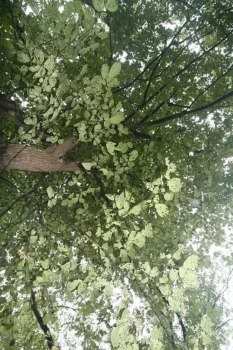
Slippery Elm: A Native Giant Worth Growing in Your Landscape
If you’re looking for a native tree that combines impressive size, wildlife value, and relatively easy care, let me introduce you to the slippery elm (Ulmus rubra). This magnificent native tree might just be the perfect addition to your landscape – if you have the space for it!
What Makes Slippery Elm Special?
Slippery elm is a true American native, naturally occurring throughout Canada and the lower 48 states. You’ll find this adaptable tree growing wild from New Brunswick and Quebec down to Florida, and from the Atlantic coast all the way west to Colorado and Texas. It’s also known by the synonym Ulmus fulva, though you’re more likely to encounter it under its current botanical name.
- Species observed
- No observations
As a perennial woody plant, slippery elm is built to last with a moderate lifespan. This single-stemmed tree can reach impressive heights of up to 85 feet at maturity, though you can expect it to hit around 45 feet after 20 years of growth. With its rapid growth rate and erect growth form, it quickly establishes itself as a prominent landscape feature.
Why Consider Planting Slippery Elm?
There are several compelling reasons to add this native beauty to your property:
- Native credentials: As a true native species, it supports local ecosystems and requires less maintenance than non-native alternatives
- Rapid growth: You won’t wait decades to enjoy substantial shade
- Adaptability: It grows well across USDA hardiness zones 3-9
- Early pollinator support: Small yellow flowers bloom in late winter, providing crucial early-season nectar when few other plants are flowering
- Versatile growing conditions: Can handle both wetland and non-wetland conditions across most regions
What to Expect from Your Slippery Elm
Slippery elm develops a classic single-stem tree form with an attractive oval crown. The foliage is green with a coarse texture, providing moderate shade in summer (the leaves aren’t super dense). Don’t expect a huge fall color show – the yellow autumn display is pleasant but not particularly conspicuous. The brown seeds that follow the spring flowers are also fairly subtle.
One nice feature is the tree’s coppicing potential and resprout ability, meaning it can bounce back from damage or heavy pruning if needed.
Growing Conditions and Care
The good news is that slippery elm is quite accommodating when it comes to growing conditions:
- Soil: Adapts to coarse, medium, and fine-textured soils with pH ranging from 5.0 to 7.5
- Moisture: Prefers consistent moisture but has medium drought tolerance once established
- Sun exposure: Shade tolerant, making it useful for woodland plantings
- Temperature: Hardy to -43°F, thriving in areas with at least 90 frost-free days
- Precipitation: Grows in areas receiving 21-83 inches of annual precipitation
Planting and Establishment Tips
Getting your slippery elm off to a good start is straightforward:
- Timing: Plant in spring after the last frost or in early fall
- Spacing: Allow plenty of room – plan for 300-800 trees per acre if doing mass plantings
- Root development: Ensure at least 40 inches of soil depth for proper root development
- Propagation: Available as bare root or container plants; can also be grown from seed (about 41,000 seeds per pound!)
- Establishment: Seeds need cold stratification, and seedlings show high vigor once germinated
Is Slippery Elm Right for Your Landscape?
Slippery elm works beautifully in several landscape scenarios:
- Large properties: Perfect as a specimen shade tree where you have room for its full size
- Woodland gardens: Excellent for naturalized plantings and habitat restoration
- Park settings: Ideal for public spaces needing substantial shade trees
- Wildlife gardens: Supports various wildlife species and early-season pollinators
However, this isn’t the right choice if you have limited space, need a compact tree, or want spectacular fall color. Also, like other elms, it can be susceptible to Dutch elm disease, though it’s generally more resistant than American elm.
The Bottom Line
Slippery elm offers an excellent combination of native authenticity, rapid growth, and landscape presence. If you have the space and want to support local wildlife while gaining substantial shade, this native tree deserves serious consideration. Just make sure you’re prepared for its ultimate size – this is definitely a measure twice, plant once kind of tree!
With proper siting and minimal care, your slippery elm will become a lasting landscape legacy, providing shade, wildlife habitat, and that satisfying knowledge that you’re growing something truly native to your region.