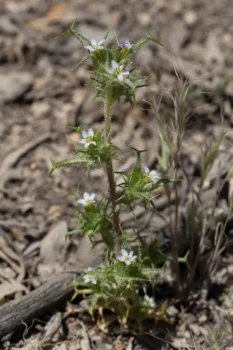
Small-Lobe Navarretia: A Rare California Native Worth Knowing About
If you’re a native plant enthusiast always on the hunt for something unique, you might have stumbled across the name small-lobe navarretia (Navarretia hamata parviloba). This little-known California native is one of those plants that makes you feel like you’ve discovered a botanical secret – partly because there’s so little information about it!
What Is Small-Lobe Navarretia?
Small-lobe navarretia is an annual forb, which is just a fancy way of saying it’s a non-woody herbaceous plant that completes its entire life cycle in one growing season. As a member of the phlox family (Polemoniaceae), it’s related to more familiar garden plants like phlox and polemonium, though you’d be hard-pressed to see the family resemblance at first glance.
This plant is also known by the synonym Navarretia hirsutissima Brand, which gives you a hint that taxonomists have had their own debates about exactly where this little plant fits in the botanical world.
Where Does It Call Home?
Small-lobe navarretia is a true California native, found exclusively within the Golden State. As a plant native to the lower 48 states, it represents part of our unique American botanical heritage. However, its exact distribution within California appears to be quite limited.
- Species observed
- No observations
The Rarity Factor: Why You Should Care
Here’s where things get interesting – and a bit concerning. Small-lobe navarretia has a Global Conservation Status of S4?T2T4, which essentially means we’re not entirely sure how rare this is, but it might be quite rare. That question mark in the rating tells you everything you need to know about how little we understand this plant’s current status in the wild.
This uncertainty makes small-lobe navarretia a plant worth paying attention to, even if you never grow it yourself. It represents the kind of specialized, local endemic that can easily slip through the cracks of conservation efforts simply because we don’t know enough about it.
Should You Try to Grow It?
Here’s the honest truth: growing small-lobe navarretia is probably not in the cards for most gardeners, and here’s why:
- Extremely limited availability – you won’t find this at your local nursery
- Unclear growing requirements due to limited research
- Potential rarity issues make wild collection inappropriate
- Unknown propagation methods
If you’re determined to include rare California natives in your garden, your best bet is to work with specialized native plant societies or botanical gardens that might have ethically sourced seeds or plants. Never collect from wild populations, especially when the conservation status is uncertain.
Better Alternatives for Your Native Garden
While small-lobe navarretia might not be practical for home cultivation, there are plenty of other California natives that can give you that rare plant satisfaction:
- Other Navarretia species that are better studied and more available
- Annual wildflowers like clarkia, lupines, and poppies
- Native grasses and forbs suited to your specific region of California
The Bigger Picture
Sometimes the most important plants aren’t the ones we grow in our gardens, but the ones that remind us why native plant conservation matters. Small-lobe navarretia represents countless specialized species that exist in small pockets of habitat, quietly going about their business until development, climate change, or other pressures threaten their existence.
By learning about plants like small-lobe navarretia, we become better advocates for the wild spaces that harbor these botanical treasures. And who knows? Maybe someday, with better understanding and conservation efforts, this mysterious little California native will find its way into cultivation – responsibly and sustainably, of course.
For now, small-lobe navarretia remains one of those plants that’s more important for what it represents than for what it can offer our gardens directly. And sometimes, that’s exactly the kind of plant worth celebrating.