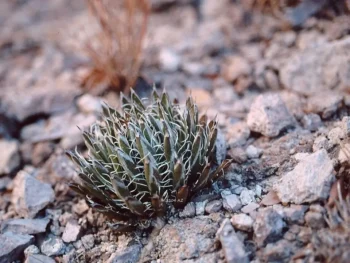
Smallflower Century Plant: A Rare Desert Gem for Your Garden
Meet the smallflower century plant (Agave parviflora), a captivating little desert dweller that’s as charming as it is resilient. Don’t let the century part fool you – while this agave doesn’t actually take 100 years to bloom, it’s definitely a plant that rewards patience with stunning beauty.
What Makes This Plant Special?
The smallflower century plant is a native treasure from the American Southwest, specifically calling Arizona home. This perennial succulent forms compact rosettes of narrow, blue-green leaves that are elegantly edged with delicate white fibers – like nature’s own decorative trim. Each leaf tips off with a small spine, giving the plant just enough attitude to keep things interesting.
As a native species found only in Arizona, this agave plays an important role in its desert ecosystem. However, there’s something crucial every gardener should know: this plant has a Global Conservation Status of S3, meaning it’s considered vulnerable in the wild. With only 21 to 100 known occurrences and between 3,000 to 10,000 individuals remaining, this little agave is definitely a rare find.
- Species observed
- No observations
Why You’ll Love (or Maybe Think Twice About) Growing It
The Good News:
- Absolutely stunning architectural form that works as a living sculpture
- Extremely drought-tolerant once established
- Perfect size for smaller gardens and containers
- Native plant that supports local ecosystems
- Attracts hummingbirds and pollinators when it finally blooms
- Low maintenance once you understand its needs
The Considerations:
- Slow growing – we’re talking desert time here
- Blooms only once after 10-25 years, then the main plant dies
- Requires very specific growing conditions
- Can be challenging to find responsibly sourced plants due to rarity
Perfect Spots for Your Smallflower Century Plant
This desert beauty shines brightest in xeriscaping and rock gardens, where its compact rosette form can really steal the show. It’s a natural fit for Mediterranean-style landscapes, drought-tolerant garden designs, and makes an excellent container plant for those wanting to bring a bit of the Southwest to their patio.
The smallflower century plant works wonderfully as an accent piece, drawing the eye with its neat, symmetrical form and those charming white fiber edges. Pair it with other desert natives or use it as a focal point in a minimalist garden design.
Growing Conditions That Make It Happy
Think desert oasis when planning for this plant. Here’s what your smallflower century plant craves:
- Light: Full sun to partial shade (morning sun is perfect)
- Soil: Well-draining is non-negotiable – sandy or rocky soil works best
- Water: Minimal once established; overwatering is its biggest enemy
- Climate: Hardy in USDA zones 8-11, can handle brief dips to 15-20°F
Planting and Care Tips for Success
Getting your smallflower century plant established is all about mimicking its natural Arizona habitat:
- Plant in spring when temperatures are mild
- Ensure excellent drainage – consider raised beds or containers if your soil is heavy
- Water deeply but infrequently; let soil dry completely between waterings
- In colder zones, provide winter protection or grow in containers you can move
- Fertilizer isn’t necessary – this plant thrives in poor soils
- Give it space to show off that perfect rosette form
A Special Note About Conservation
If you’re smitten with this rare beauty (and honestly, who wouldn’t be?), please source your plant responsibly. Due to its vulnerable status in the wild, it’s crucial to purchase from reputable nurseries that propagate their own plants rather than wild-collect them. By choosing responsibly sourced smallflower century plants, you’re helping protect this species while still enjoying its unique charm in your garden.
Some specialty native plant nurseries and desert plant societies may occasionally have ethically propagated specimens available – it’s worth joining native plant groups in your area to connect with other enthusiasts.
The Bottom Line
The smallflower century plant is a true gem for gardeners who appreciate slow beauty and want to grow something genuinely special. Yes, it requires patience and specific conditions, but for those willing to meet its needs, this rare agave offers unmatched architectural beauty and the satisfaction of growing a native treasure. Just remember: source responsibly, and you’ll be rewarded with decades of desert elegance right in your own garden.