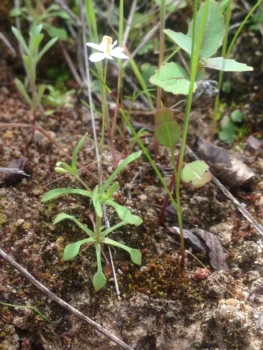
Smallflower Fairypoppy: California’s Delicate Native Annual
Meet the smallflower fairypoppy (Meconella denticulata), one of California’s most charming yet lesser-known native wildflowers. This delicate annual herb might be small in stature, but it packs a big punch when it comes to supporting local ecosystems and adding subtle beauty to native gardens.
What Makes Smallflower Fairypoppy Special?
The smallflower fairypoppy is a true California native, found exclusively within the Golden State’s diverse landscapes. As an annual forb, this herbaceous plant completes its entire life cycle in just one growing season, making it a fascinating addition to any native plant collection.
Don’t let the name fool you – while the flowers may be small, they’re absolutely enchanting. Each delicate bloom features four pristine white petals that seem to glow against the plant’s finely dissected, almost feathery foliage. The overall effect is ethereal and cottage garden-like, despite being a true wildflower.
Where Does It Grow?
This lovely native is endemic to California, meaning you won’t find it growing wild anywhere else in the world. Within the state, it thrives in coastal and montane regions, adapting to California’s unique Mediterranean climate patterns.
- Species observed
- No observations
Why Consider Growing Smallflower Fairypoppy?
There are several compelling reasons to welcome this native beauty into your garden:
- Supports native pollinators, particularly small native bees
- Adds delicate texture and subtle color to wildflower gardens
- Requires minimal care once established
- Self-seeds readily, creating natural colonies
- Perfect for rock gardens and naturalistic plantings
A Word About Conservation
Before you rush to plant smallflower fairypoppy, there’s something important to know: this species has a Global Conservation Status of S3?, which indicates its conservation status is undefined but potentially of concern. This means if you choose to grow it, please source your seeds or plants responsibly from reputable native plant nurseries or seed suppliers who use ethically collected material.
Growing Smallflower Fairypoppy Successfully
The good news is that this native annual is relatively easy to grow once you understand its preferences:
Climate and Hardiness
Smallflower fairypoppy thrives in USDA hardiness zones 8-10, perfectly suited to California’s Mediterranean climate. It’s adapted to the state’s wet winter/dry summer pattern.
Light and Soil Requirements
This adaptable native performs well in partial shade to full sun conditions. It prefers well-drained soils and can tolerate a range of soil types, from sandy to clay, as long as drainage is adequate. Moderate moisture during the growing season is ideal.
Planting Tips
- Direct seed in fall for spring germination
- Scatter seeds on prepared soil surface and lightly cover
- Water gently until germination occurs
- Allow plants to self-seed for natural colonies
Care and Maintenance
One of the best things about smallflower fairypoppy is how low-maintenance it is. Once established, it requires minimal care. Water sparingly during dry periods, but avoid overwatering. As an annual, individual plants will complete their cycle and die back, but they’ll often leave behind seeds for the next generation.
Design Ideas
Smallflower fairypoppy works beautifully in several garden settings:
- Native wildflower meadows
- Rock gardens where its delicate form provides contrast
- Naturalistic cottage-style plantings
- Mixed borders with other California natives
- Container gardens (though it may not return as readily)
The Bottom Line
Smallflower fairypoppy is a wonderful choice for gardeners looking to support California’s native ecosystem while adding subtle, delicate beauty to their landscapes. Its minimal care requirements and self-seeding nature make it perfect for busy gardeners who want maximum impact with minimal effort. Just remember to source it responsibly and let this charming native work its quiet magic in your garden.
While it may not be the showiest flower in your garden, the smallflower fairypoppy offers something even more valuable: a direct connection to California’s unique botanical heritage and a helping hand for the small pollinators that keep our ecosystems thriving.