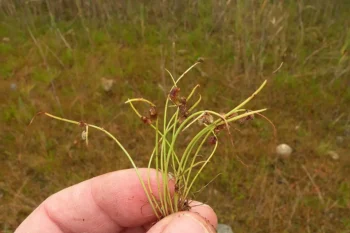
Smallflower Halfchaff Sedge: A Tiny Native with Big Ecological Impact
Don’t let the name fool you – while the smallflower halfchaff sedge (Lipocarpha micrantha) might not win any beauty contests, this unassuming little native plant packs a serious ecological punch. If you’re passionate about wetland restoration, native landscaping, or supporting local ecosystems, this diminutive sedge deserves a spot on your radar.
Meet the Smallflower Halfchaff Sedge
This annual sedge goes by several scientific aliases, including Hemicarpha micrantha and Scirpus micranthus, but whatever you call it, Lipocarpha micrantha is a true North American native. As a member of the sedge family (Cyperaceae), it’s one of those grass-like plants that quietly does important work in our wetland ecosystems.
Where You’ll Find This Native Gem
Talk about a well-traveled native! Smallflower halfchaff sedge has one of the most impressive natural ranges you’ll find, stretching from Canada all the way down to Puerto Rico. It calls home to an amazing variety of states and provinces, from British Columbia to Florida, and from Maine to California. This extensive distribution speaks to its adaptability and ecological importance across diverse climates and regions.
- Species observed
- No observations
A Conservation Concern Worth Knowing About
Here’s where things get serious: despite its wide range, smallflower halfchaff sedge faces significant conservation challenges in some areas. In New Jersey, it’s listed as endangered with an S1 rarity status, meaning it’s critically imperiled in that state. This designation should give any responsible gardener pause – if you’re considering adding this plant to your landscape, make absolutely sure you’re sourcing it responsibly from reputable native plant nurseries, never from wild populations.
Why Your Garden (Might) Need This Sedge
Let’s be honest – you’re not planting smallflower halfchaff sedge for its stunning blooms or architectural presence. Instead, consider it if you’re working on:
- Wetland restoration projects
- Rain garden installations
- Pond or stream bank stabilization
- Creating habitat for native wildlife
- Supporting regional biodiversity
This little sedge excels in specialized niches where form definitely follows function.
The Wetland Specialist
One of the most fascinating aspects of smallflower halfchaff sedge is how its relationship with water varies across regions. In some areas like the Arid West, Midwest, and Western Mountains, it’s classified as an Obligate Wetland plant – meaning it almost always needs wet conditions to thrive. However, in regions like the Atlantic and Gulf Coastal Plain, Eastern Mountains, and Great Plains, it’s more flexible as a Facultative Wetland plant, tolerating both wet and occasionally drier conditions.
Growing Your Own Smallflower Halfchaff Sedge
If you’re committed to growing this conservation-important native, here’s what you need to know:
Perfect Growing Conditions
- Sunlight: Full sun to partial shade
- Soil: Consistently moist to wet, can handle periodic flooding
- Hardiness: Adaptable across USDA zones 3-10 depending on your region
- Annual lifecycle: This plant completes its entire life cycle in one growing season
Planting and Care Tips
- Start from responsibly sourced seed – avoid collecting from wild populations
- Plant in spring after last frost
- Ensure consistent moisture throughout the growing season
- Minimal maintenance required once established in proper conditions
- Allow plants to self-seed naturally for ongoing populations
The Bottom Line
Smallflower halfchaff sedge isn’t for every garden or every gardener. It’s a specialist plant for specialized situations – think wetland restoration, rain gardens, or naturalistic landscapes where function trumps flashy aesthetics. If you’re working on habitat restoration or have a wet area that needs stabilizing, this humble native could be exactly what your project needs.
Just remember: with great ecological power comes great responsibility. Given its endangered status in some regions, only source this plant from reputable native nurseries, and consider it as part of a broader commitment to supporting native plant communities rather than as a standalone garden addition.
Sometimes the smallest plants make the biggest difference – and smallflower halfchaff sedge is living proof of that principle.