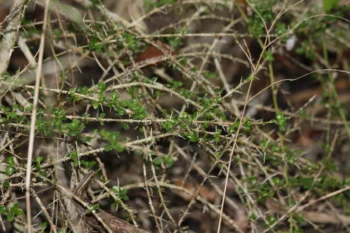
Smallflower Lilythorn: A Thorny Native Beauty for Warm Climate Gardens
If you’re looking for a tough, native shrub that can handle coastal conditions while providing year-round interest, the smallflower lilythorn (Catesbaea parviflora) might just be your new garden hero. This spiky little character brings both beauty and brawn to South Florida landscapes, though it’s not for every gardener or every garden.
What Is Smallflower Lilythorn?
Smallflower lilythorn is a native perennial shrub that typically grows as a multi-stemmed woody plant reaching 4 to 5 meters (13 to 16 feet) in height, though it often stays much smaller in garden settings. Don’t let the small in its name fool you – this plant packs plenty of personality with its dense, thorny branches and delicate white tubular flowers.
Where Does It Call Home?
This native beauty is naturally found in Florida and Puerto Rico, representing the northernmost range of a genus that’s more common throughout the Caribbean. In Florida, you’ll find it in coastal areas where it has adapted to sandy soils and salt spray.
- Species observed
- No observations
Why Consider Growing Smallflower Lilythorn?
There are several compelling reasons to include this native shrub in your landscape:
- Native credentials: Supporting local ecosystems by choosing native plants
- Coastal tough: Excellent salt tolerance makes it perfect for seaside gardens
- Wildlife magnet: Attracts butterflies and other pollinators with its small white flowers
- Drought warrior: Once established, it thrives with minimal water
- Natural barrier: Those thorns make it an excellent security or privacy screen
- Evergreen appeal: Provides year-round structure and interest
A Word of Caution: Rarity Status
Before you rush out to find this plant, there’s something important to know. Smallflower lilythorn has a conservation status that suggests it may be uncommon in its native range. If you decide to grow this species, make sure you source it responsibly from reputable native plant nurseries that propagate rather than collect from wild populations.
Growing Smallflower Lilythorn Successfully
Climate Requirements
This tropical to subtropical shrub thrives in USDA hardiness zones 10-11. If you’re gardening outside of South Florida or similar warm climates, this plant won’t survive your winters outdoors.
Ideal Growing Conditions
Smallflower lilythorn isn’t particularly fussy, but it does have preferences:
- Sunlight: Full sun to partial shade
- Soil: Well-draining sandy soils (perfect for coastal conditions)
- Water: Drought tolerant once established, but appreciates occasional deep watering
- Salt tolerance: Excellent for coastal gardens
Planting and Care Tips
Getting your smallflower lilythorn established is relatively straightforward:
- Plant in spring or fall when temperatures are moderate
- Dig a hole as deep as the root ball and twice as wide
- Water regularly the first year to establish roots
- Mulch around the base to retain moisture and suppress weeds
- Prune carefully – those thorns mean business! Wear thick gloves and long sleeves
- Once established, minimal care is needed
Landscape Design Ideas
Smallflower lilythorn works beautifully in several landscape scenarios:
- Coastal gardens: Perfect for beachfront properties
- Native plant gardens: Pairs well with other Florida natives
- Xeriscape designs: Excellent for water-wise landscaping
- Security plantings: Those thorns provide natural deterrence
- Wildlife gardens: Creates habitat and food sources for local fauna
Is This Plant Right for Your Garden?
Smallflower lilythorn is an excellent choice if you live in the right climate zone and want a low-maintenance, native shrub that supports local wildlife. It’s particularly perfect for coastal gardeners dealing with salt spray and sandy soils. However, it’s not suitable for colder climates, small spaces where thorns might be problematic, or gardeners who prefer non-native ornamental varieties.
Remember to source this potentially rare native responsibly, and you’ll be rewarded with a tough, beautiful shrub that truly belongs in your South Florida landscape.