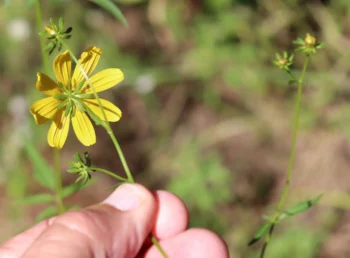
Smallfruit Beggarticks: A Rare Native Annual for Wetland Gardens
If you’re passionate about native plants and have a wet spot in your garden that’s been challenging to fill, smallfruit beggarticks (Bidens mitis) might be just the plant you’re looking for. This lesser-known native annual offers a unique opportunity to support local ecosystems while adding authentic character to wetland gardens and rain gardens.
Meet the Smallfruit Beggarticks
Smallfruit beggarticks is a native annual that’s perfectly at home in wet conditions. Unlike its more aggressive cousin, common beggarticks, this species tends to be much more well-behaved and is actually quite rare in some areas. The plant gets its charming common name from its small, inconspicuous fruits that develop after the bright yellow flowers fade.
Where You’ll Find This Native Gem
This southeastern native calls twelve states home, stretching from New Jersey down to Florida and west to Texas and Louisiana. You’ll find it naturally occurring in Alabama, Delaware, Florida, Georgia, Louisiana, Maryland, Mississippi, New Jersey, North Carolina, South Carolina, Texas, and Virginia. However, it’s become increasingly uncommon in parts of its range.
- Species observed
- No observations
A Word of Caution: Rarity Matters
Before you get too excited about adding smallfruit beggarticks to your garden, there’s something important to know: this plant is listed as endangered in New Jersey with a rarity status of S1, meaning it’s critically imperiled in that state. If you’re interested in growing this species, please only source seeds or plants from reputable native plant nurseries that use responsibly collected material – never collect from wild populations.
What Makes It Garden-Worthy
While smallfruit beggarticks won’t win any beauty contests, it has its own subtle charm and important ecological value:
- Native authenticity: This is a true local native that belongs in your regional ecosystem
- Pollinator support: The small yellow flowers attract native bees and other beneficial insects during fall blooming
- Wetland restoration: Perfect for rain gardens and areas prone to seasonal flooding
- Low maintenance: Once established in the right conditions, it largely takes care of itself
Growing Conditions: It’s All About the Water
Smallfruit beggarticks is what botanists call an obligate wetland plant, which means it almost always occurs in wetlands. Here’s what it needs to thrive:
- Moisture: Consistently wet to saturated soil – this plant has high moisture requirements
- Soil type: Adapts to fine and medium-textured soils but not coarse, sandy soils
- Sun exposure: Full sun to partial shade (intermediate shade tolerance)
- pH range: Quite flexible, handling anything from 5.0 to 8.6
- Climate: Needs at least 160 frost-free days and grows best in USDA zones 7-10
Perfect Garden Settings
This isn’t a plant for your typical perennial border. Instead, consider smallfruit beggarticks for:
- Rain gardens: Excellent for areas that collect runoff
- Bog gardens: Thrives in consistently wet conditions
- Pond margins: Great for naturalizing around water features
- Wetland restoration projects: Helps recreate authentic native plant communities
- Wildlife gardens: Supports native pollinators and provides seeds for birds
Size and Growth Habits
Smallfruit beggarticks grows as a single-crowned annual that can reach up to 3.5 feet tall. It has a rapid growth rate during its active growing season of spring through fall, with coarse-textured green foliage that becomes conspicuous in fall when the plant is in full bloom. The bright yellow flowers appear in fall, followed by brown seeds that aren’t particularly showy but provide wildlife value.
Planting and Care Tips
Growing smallfruit beggarticks successfully is all about getting the conditions right:
- Seed starting: This plant propagates readily by seed, with about 130,000 seeds per pound
- Timing: Plant seeds in early spring after the last frost
- Location: Choose the wettest spot in your garden – it can handle periodic flooding
- Maintenance: Very low maintenance once established; may self-seed if conditions are right
- Winter care: As an annual, the plant will die back in winter, but seeds may germinate the following spring
The Bottom Line
Smallfruit beggarticks isn’t for everyone or every garden. It requires specific wet conditions and won’t provide the showy blooms that many gardeners seek. However, if you have a wet area that needs native plants, care about supporting rare species, and want to create authentic habitat for local wildlife, this humble annual could be a perfect fit. Just remember to source it responsibly and give it the soggy conditions it craves!