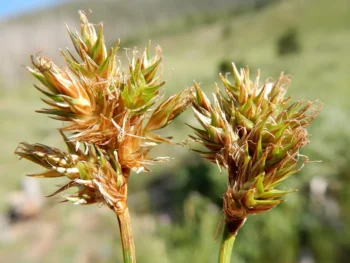
Smallwing Sedge: A Versatile Native Grass for Your Landscape
If you’re looking to add some authentic North American charm to your garden while supporting local ecosystems, smallwing sedge (Carex microptera) might just be the unsung hero you’ve been searching for. This perennial sedge brings understated elegance and practical benefits to landscapes across western North America.
Meet the Smallwing Sedge
Smallwing sedge is a native perennial that belongs to the sedge family, making it a grass-like plant that forms attractive clumps in the landscape. Despite its humble appearance, this hardy plant has been quietly beautifying North American landscapes for centuries, and it’s ready to do the same for your garden.
Where Does It Call Home?
This adaptable native has an impressive range, naturally occurring across much of western North America. You’ll find smallwing sedge growing wild from the northern reaches of Canada (including Alberta, British Columbia, Saskatchewan, Manitoba, Yukon, and Northwest Territories) down through the western United States in Arizona, California, Colorado, Idaho, Montana, Nevada, New Mexico, Oregon, South Dakota, Utah, Washington, and Wyoming.
- Species observed
- No observations
Why Choose Smallwing Sedge for Your Garden?
There are several compelling reasons to consider this native sedge for your landscape:
- True native credentials: Supporting local ecosystems while reducing maintenance needs
- Versatile growing conditions: Tolerates both wetland and upland conditions
- Low maintenance: Once established, requires minimal care
- Erosion control: Excellent for stabilizing soil on slopes or near water features
- Fine texture: Adds delicate, grass-like texture to garden compositions
- Long-lived: This perennial will be a lasting addition to your landscape
Physical Characteristics
Smallwing sedge grows in an upright, bunching form that typically reaches about 2 feet in height. Its fine-textured, green foliage creates an elegant, fountain-like appearance. The plant produces small, inconspicuous green flowers in late spring, followed by brown seeds in summer. While the flowers won’t stop traffic, they contribute to the plant’s naturalistic charm and support the broader ecosystem.
Don’t expect rapid gratification with this plant – smallwing sedge has a slow growth rate, but this also means it won’t quickly outgrow its intended space.
Perfect Garden Roles
This versatile sedge excels in several landscape applications:
- Rain gardens: Its facultative wetland status makes it perfect for areas with variable moisture
- Native plant gardens: An authentic choice for regionally appropriate landscapes
- Naturalized areas: Ideal for creating low-maintenance, wildlife-friendly spaces
- Erosion control: Particularly valuable on slopes or near water features
- Textural contrast: Provides fine texture to complement broader-leafed plants
Growing Conditions and Care
One of smallwing sedge’s greatest assets is its adaptability. Here’s what it prefers:
Soil and Drainage
- Adapts to coarse and medium-textured soils
- pH range of 5.6 to 7.4 (slightly acidic to neutral)
- High tolerance for temporarily waterlogged conditions
- Low fertility requirements (perfect for low-input gardens)
Water Requirements
This sedge has high moisture requirements and no drought tolerance, making it ideal for naturally moist areas or gardens with consistent irrigation. It’s particularly well-suited for rain gardens and areas that experience seasonal flooding.
Light Conditions
Smallwing sedge is intolerant of shade and performs best in full sun locations.
Climate Tolerance
Extremely cold-hardy, this plant can survive temperatures down to -33°F, making it suitable for USDA hardiness zones 3-8. It needs at least 85 frost-free days and grows best with annual precipitation between 10-24 inches.
Planting and Propagation
Getting started with smallwing sedge is straightforward:
- Availability: Routinely available from native plant nurseries
- Planting methods: Can be grown from seed, bare root plants, or sprigs
- Timing: Plant in spring or fall for best establishment
- Spacing: Plan for 1,700-4,800 plants per acre depending on desired coverage speed
- Seeds require cold stratification: If growing from seed, they need a cold treatment period
Keep in mind that seedling vigor is low and seed abundance is typically limited, so purchasing plants might be more reliable than starting from seed.
Wildlife and Ecosystem Benefits
While smallwing sedge may not be a showy pollinator magnet, it plays important ecosystem roles. As a native sedge, it provides habitat structure for small wildlife and contributes to the complex web of relationships that support healthy ecosystems. Its seeds may provide food for birds and small mammals, and its dense growth can offer shelter for beneficial insects.
Potential Drawbacks to Consider
Before falling head-over-heels for smallwing sedge, consider these factors:
- Slow establishment: Patience is required as this plant takes time to fill in
- High water needs: Not suitable for xeriscapes or drought-prone areas without irrigation
- Sun requirements: Won’t thrive in shady locations
- Limited seasonal interest: Primarily valued for foliage texture rather than showy flowers
The Bottom Line
Smallwing sedge is an excellent choice for gardeners who appreciate native plants and want to create sustainable, low-maintenance landscapes in appropriate climates. While it won’t provide dramatic seasonal displays, it offers something perhaps more valuable: a reliable, authentic piece of North American natural heritage that supports local ecosystems while adding subtle beauty to your garden.
If you have the right conditions – full sun, consistent moisture, and patience for slow establishment – smallwing sedge could become a treasured part of your native plant palette. It’s particularly valuable for anyone working on restoration projects, rain gardens, or simply wanting to reduce their landscape’s environmental footprint while creating habitat for local wildlife.