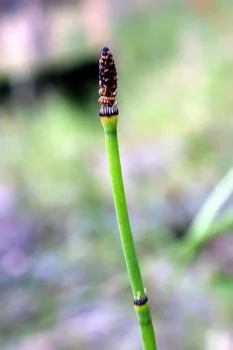
Smooth Horsetail: A Living Fossil for Your Wetland Garden
Meet smooth horsetail (Equisetum laevigatum), a fascinating plant that’s been around since the dinosaurs roamed the Earth! This perennial living fossil might just be the most unique addition to your native plant collection, especially if you’re dealing with wet, soggy areas where other plants fear to tread.
What Makes Smooth Horsetail Special?
Don’t let the name fool you – smooth horsetail isn’t actually related to horses or their tails. This ancient plant belongs to a group that predates flowering plants by millions of years. Instead of flowers and seeds, it reproduces through spores, making it a true botanical curiosity. With its distinctive jointed, bamboo-like stems and whorl of needle-like branches, smooth horsetail brings an architectural, almost alien quality to the landscape.
Where Does It Call Home?
Smooth horsetail is impressively widespread across North America, native to both Canada and the lower 48 states. You can find it naturally growing from Alberta and British Columbia down to Texas and from coast to coast, thriving in states like Arizona, California, Michigan, Pennsylvania, and many others. This extensive range speaks to its remarkable adaptability to different climates and conditions.
- Species observed
- No observations
Garden Appeal and Design Role
Standing up to 5 feet tall with its erect, green stems, smooth horsetail creates striking vertical lines in the landscape. Its rapid growth rate and unique texture make it perfect for:
- Adding architectural interest to bog gardens and rain gardens
- Creating natural screens along pond edges
- Establishing erosion control on wet slopes
- Bringing prehistoric charm to naturalistic landscapes
The plant maintains its green color through most of the growing season, with porous foliage that creates interesting light and shadow patterns.
Perfect Growing Conditions
Smooth horsetail is happiest in consistently moist to wet conditions – think of it as nature’s way of solving your soggy soil problems! Here’s what it loves:
- Soil: Fine to medium-textured soils with high moisture retention
- Water: High tolerance for waterlogged conditions (low drought tolerance)
- pH: Acidic to slightly acidic conditions (4.5-6.5)
- Sun: Full sun (shade intolerant)
- Temperature: Hardy to -38°F, suitable for USDA zones 3-9
This plant thrives in wetland conditions across different regions, from facultative wetland status in most areas to facultative in the Great Plains, meaning it can handle both wet and occasionally drier conditions depending on your location.
Planting and Care Tips
Here’s where things get interesting – you won’t find smooth horsetail at your typical garden center. Commercial availability is listed as no known source, which means you’ll need to get creative:
- Look for bare root divisions from native plant societies or specialized wetland restoration suppliers
- Propagation by sprigs is possible if you can source material responsibly
- Plant in spring when the soil is workable but still moist
- Space plants 4,800-11,000 per acre for restoration projects (roughly 3-6 feet apart for home gardens)
- Minimal fertilizer needs – this plant prefers lean conditions
Wildlife and Ecosystem Benefits
While smooth horsetail doesn’t produce showy flowers for pollinators, it serves other important ecological functions. Its dense growth provides cover for small wildlife, and its presence indicates healthy wetland conditions. The plant’s ability to tolerate fire makes it valuable for ecosystem resilience.
Special Considerations
Before you get too excited, there are a few things to keep in mind:
- Rarity Alert: In Arkansas, smooth horsetail has a rarity status of S1, meaning it’s critically imperiled. If you live in Arkansas, appreciate it in the wild but don’t collect it.
- Moderate Toxicity: Like other horsetails, this plant contains compounds that can be harmful if consumed in large quantities by livestock or pets.
- Slow Spread: While it grows rapidly upward, it spreads slowly vegetatively, so it won’t take over your garden overnight.
Is Smooth Horsetail Right for Your Garden?
Consider smooth horsetail if you have consistently wet areas that challenge other plants, want to create a unique prehistoric garden vibe, or are working on wetland restoration. It’s not the right choice for dry gardens, shaded areas, or anywhere you need traditional flowering beauty.
This living fossil offers something truly different – a chance to grow a plant that’s remained virtually unchanged for 300 million years. In the right wet, sunny spot, smooth horsetail can transform a problem area into a fascinating conversation piece that connects your garden to the deep history of life on Earth.