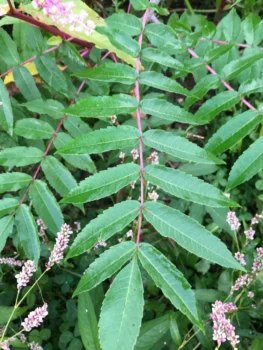
Smooth Sumac: A Bold Native Shrub That Commands Attention
If you’re looking for a native plant that puts on a spectacular fall show while supporting wildlife year-round, smooth sumac (Rhus glabra) might just be your new garden star. This hardy North American native brings drama to the landscape with its fiery autumn colors and distinctive architectural form, though it comes with a few personality quirks you should know about before inviting it into your garden.
What Is Smooth Sumac?
Smooth sumac is a perennial shrub that typically grows 8-12 feet tall and can spread even wider through underground rhizomes. True to its name, this sumac has smooth (non-hairy) stems, distinguishing it from its fuzzy cousin, staghorn sumac. The plant forms colonies over time, creating thickets that can be either a blessing or a challenge, depending on your gardening goals.
Native Status and Where It Grows
This is a true North American native, naturally occurring throughout Canada and the lower 48 states. You’ll find smooth sumac growing wild from Alberta to Florida, and from coast to coast. Its incredible adaptability has allowed it to colonize diverse habitats across the continent.
- Species observed
- No observations
However, there’s an important caveat: in Missouri, smooth sumac is classified as having Nuisance (DOC) invasive status. While it’s native to the region, it can become overly aggressive in certain situations, so Missouri gardeners should plant with extra caution and be prepared to manage its spread.
Why You Might Want to Grow Smooth Sumac
Despite its aggressive tendencies, smooth sumac offers several compelling benefits:
- Stunning fall color: The foliage turns brilliant shades of red, orange, and yellow, creating one of nature’s most spectacular autumn displays
- Wildlife magnet: The plant provides food for large animals, small mammals, and terrestrial birds, contributing 5-10% of their diet
- Pollinator support: Small yellow flowers in spring attract bees, wasps, and other beneficial insects
- Low maintenance: Once established, it’s incredibly drought tolerant and requires minimal care
- Erosion control: The spreading root system makes it excellent for stabilizing slopes and preventing soil erosion
- Year-round interest: Red berry clusters persist through winter, and the bare stems create striking architectural forms
Potential Drawbacks to Consider
Before you plant smooth sumac, consider these characteristics:
- Aggressive spreader: It spreads by rhizomes and can quickly take over larger areas than you intended
- Fire sensitive: Not fire resistant, so avoid planting in fire-prone areas
- Short lifespan: Individual stems are relatively short-lived, though the colony persists
- Dense growth: Can crowd out other plants if not managed
Growing Conditions and Hardiness
Smooth sumac is remarkably adaptable and grows in USDA hardiness zones 2-9. It thrives in:
- Soil: Coarse to medium-textured soils; avoid fine, clay-heavy soils
- pH: Tolerates a range from 5.3 to 7.5
- Moisture: Low water needs once established; drought tolerant
- Light: Full sun (shade intolerant)
- Temperature: Hardy to -33°F
This shrub prefers well-draining soil and can handle poor, nutrient-deficient conditions. It’s also moderately salt tolerant, making it suitable for roadside plantings.
Best Garden Settings
Smooth sumac works best in:
- Native plant gardens and prairie restorations
- Wildlife habitat gardens
- Naturalized landscapes where spreading is welcome
- Erosion control on slopes or disturbed sites
- Large properties with room for colonies to develop
Planting and Care Tips
Getting smooth sumac established is straightforward:
- Planting: Plant in spring after frost danger passes. Space plants 8-15 feet apart if you want individual specimens, closer for faster coverage
- Propagation: Grows easily from seed (59,775 seeds per pound!) or can be propagated from bare root or container plants
- Watering: Water regularly the first year, then reduce as the plant becomes drought tolerant
- Maintenance: Minimal care needed. Prune in late winter if you want to control size or remove dead wood
- Managing spread: Install root barriers if you need to contain its spread, or regularly mow around colonies to keep them in bounds
The Bottom Line
Smooth sumac is a fantastic choice for gardeners who want a low-maintenance native plant that supports wildlife and provides spectacular seasonal interest. However, it’s not for small gardens or situations where precise control is needed. If you have the space and can embrace its spreading nature, smooth sumac will reward you with years of brilliant fall color and wildlife activity.
For Missouri gardeners, extra consideration is warranted due to its nuisance classification. Consider whether you can commit to managing its spread responsibly, and always check with local native plant societies for region-specific guidance.
When grown thoughtfully in the right setting, smooth sumac proves that native plants can be both beautiful and beneficial – just be sure you’re ready for its enthusiastic personality!