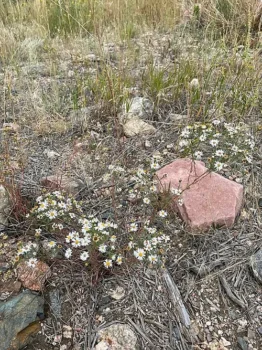
Smooth White Aster: A Hidden Gem for Western Native Gardens
If you’re looking for a delicate, late-season bloomer that won’t hog the spotlight but adds just the right touch of charm to your native garden, meet the smooth white aster (Symphyotrichum porteri). This understated perennial might not be the flashiest flower in your garden, but it’s exactly the kind of reliable, easy-going plant that makes other gardeners wonder how you create such naturally beautiful spaces.
What Makes Smooth White Aster Special?
Smooth white aster is a true native of the American West, naturally growing across Colorado, New Mexico, and Wyoming. As a herbaceous perennial, it dies back to the ground each winter and returns reliably each spring, gradually forming small colonies over time. You might also see this plant listed under its old botanical names, Aster ericoides var. strictus or Aster porteri, but don’t let the name changes confuse you – it’s the same wonderful plant.
This native wildflower grows naturally in the high plains and montane regions of these three western states, where it has adapted to challenging conditions that many garden plants simply can’t handle.
- Species observed
- No observations
Why Your Garden Will Love This Native Beauty
What sets smooth white aster apart is its perfect timing and undemanding nature. While many native plants finish blooming by midsummer, this little charmer saves its show for late summer and fall, producing clouds of small, white daisy-like flowers just when pollinators need them most. The narrow, linear leaves create an airy, grass-like texture that plays beautifully with other native plants.
Here’s what makes it a smart choice for western gardeners:
- Blooms when most other natives are winding down
- Extremely drought tolerant once established
- Attracts late-season butterflies and native bees
- Requires virtually no maintenance
- Perfect for filling gaps in naturalized plantings
Where Smooth White Aster Shines
This adaptable native works beautifully in several garden styles. It’s a natural choice for prairie gardens and native plant landscapes, where its delicate texture and late blooms complement grasses and other wildflowers perfectly. In xeriscapes, it adds softness without requiring extra water. Even in more formal perennial borders, smooth white aster makes an excellent filler plant, creating a naturalized backdrop for showier blooms.
The plant’s facultative upland status means it typically prefers well-draining, non-wetland sites, though it can occasionally tolerate some moisture. This makes it quite versatile for different garden situations.
Growing Smooth White Aster: Easier Than You Think
One of the best things about smooth white aster is how uncomplicated it is to grow. Hardy in USDA zones 4-7, it thrives in the same conditions where it evolved – full sun and well-draining soils. It actually prefers alkaline soils, which is perfect for much of the western United States where alkaline conditions are common.
Planting tips:
- Choose a sunny location with good drainage
- Plant in spring after the last frost
- Space plants 12-18 inches apart
- Water regularly the first season to establish roots
- After establishment, supplemental watering is rarely needed
Care and maintenance:
- Cut back to ground level in late fall or early spring
- No fertilizer needed – it prefers lean soils
- May self-seed in favorable conditions
- Divide clumps every 3-4 years if desired
Supporting Wildlife and Conservation
Late-blooming natives like smooth white aster provide crucial nectar sources when many other flowers have finished for the season. This timing makes it especially valuable for butterflies preparing for migration and native bees building winter stores.
It’s worth noting that smooth white aster has a conservation status that suggests it may be uncommon in parts of its range. If you’re interested in growing this plant, make sure to source seeds or plants from reputable native plant nurseries that collect responsibly. Never collect from wild populations.
The Bottom Line
Smooth white aster might not be the plant that stops traffic, but it’s exactly the kind of steady, reliable native that forms the backbone of successful wildlife gardens. It asks for almost nothing, gives back generously, and plays well with others. For gardeners in Colorado, New Mexico, and Wyoming looking to create authentic native landscapes, this unassuming perennial deserves a spot in your garden plan.
Sometimes the best plants are the ones that make everything else look better – and smooth white aster does exactly that, one delicate white bloom at a time.