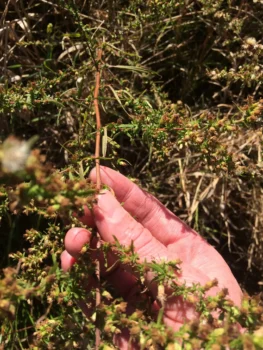
Smooth White Oldfield Aster: A Late-Season Garden Hero
When most flowers are calling it quits for the season, the smooth white oldfield aster (Symphyotrichum racemosum) is just getting started. This unassuming native perennial might not win any beauty contests in spring, but come late summer and fall, it transforms into a cloud of tiny white stars that’ll make you wonder why you ever doubted it.
What Exactly Is Smooth White Oldfield Aster?
Don’t let the oldfield part fool you – this isn’t some weedy cast-off. Smooth white oldfield aster is a hardy perennial forb that’s native to most of the lower 48 states. As a forb, it’s essentially an herbaceous plant without woody stems, meaning it dies back to the ground each winter and returns fresh each spring.
You might also see this plant listed under various synonyms in older gardening books, as botanists have shuffled it around quite a bit over the years. But regardless of what name it goes by, this aster has earned its place in American gardens.
Where Does It Call Home?
This adaptable native has quite an impressive range, naturally occurring across Alabama, Arkansas, Connecticut, District of Columbia, Florida, Georgia, Illinois, Indiana, Kentucky, Louisiana, Maine, Maryland, Massachusetts, Mississippi, Missouri, New Jersey, New York, North Carolina, Ohio, Oklahoma, Pennsylvania, Rhode Island, South Carolina, Tennessee, Texas, Vermont, Virginia, West Virginia, and Wisconsin. It’s also established itself in New Brunswick and Ontario, though it’s considered non-native in Canada.
- Species observed
- No observations
Why Your Garden (and Local Wildlife) Will Love It
Here’s where smooth white oldfield aster really shines. When it blooms in late summer through fall, it becomes a magnet for pollinators who are desperately seeking nectar sources before winter. Butterflies, native bees, and other beneficial insects flock to its masses of small white flowers with bright yellow centers.
The timing couldn’t be more perfect – it blooms during monarch butterfly migration, making it a valuable fuel stop for these incredible travelers. Plus, its seeds provide food for birds well into winter.
Growing Conditions: Surprisingly Flexible
One of the best things about smooth white oldfield aster is its go with the flow attitude toward growing conditions. This plant has a wetland status of Facultative Wetland across all regions, which means it’s equally happy in moist spots or drier areas once established.
Here’s what it prefers:
- Full sun to partial shade (though more sun means more flowers)
- Various soil types – it’s not picky
- USDA Hardiness Zones 3-8
- Both wet and dry conditions (after establishment)
Perfect Spots in Your Landscape
Think of smooth white oldfield aster as your garden’s reliable supporting actor. It works beautifully in:
- Prairie and wildflower gardens
- Rain gardens and bioswales
- Naturalized areas where you want low-maintenance color
- Background plantings in perennial borders
- Meadow-style landscapes
It’s especially valuable in spots where you want something that looks natural and requires minimal fussing.
Planting and Care: Easy Does It
Good news for busy gardeners – smooth white oldfield aster is refreshingly low-maintenance. Here are the basics:
Planting: Spring is ideal, but you can plant container-grown specimens almost any time during the growing season. Space plants about 18-24 inches apart, as they’ll spread over time.
Watering: Water regularly the first year to help establish roots, then it’s largely drought-tolerant.
Maintenance: Cut back to ground level in late winter or early spring. You might need to divide clumps every 3-4 years if they get too crowded.
Fair warning: This plant self-seeds readily, which is great for naturalizing but might be too enthusiastic for formal gardens. Deadhead spent flowers if you want to prevent spread.
Is It Right for Your Garden?
Smooth white oldfield aster is perfect if you want a native plant that supports wildlife, tolerates various conditions, and provides late-season interest without demanding much attention. It’s ideal for gardeners who appreciate subtle beauty over flashy showstoppers.
However, it might not be the best choice if you prefer highly controlled, formal landscapes, as it has a tendency to self-seed and naturalize. Think of it as the friendly neighbor who occasionally drops by unannounced – welcome in most situations, but maybe not what you want in your front parlor.
For Canadian gardeners, while this plant can grow in your climate, consider native alternatives like aromatic aster (Symphyotrichum oblongifolium) or other locally native aster species that provide similar benefits while supporting your local ecosystem.
Whether you’re creating a pollinator haven, establishing a rain garden, or simply want a reliable native that blooms when most everything else has packed it in for the year, smooth white oldfield aster deserves a spot on your plant list. Sometimes the best garden performers are the ones that just quietly do their job – and do it beautifully.