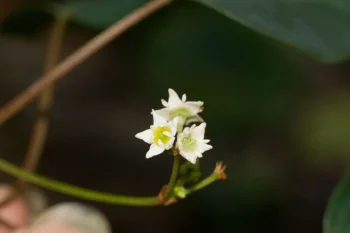
Smoothfruit Chewstick: A Rare Hawaiian Native Worth Protecting
If you’re passionate about native Hawaiian plants and conservation gardening, you’ve probably never heard of the smoothfruit chewstick (Gouania meyenii). And honestly, that’s not surprising – this little-known shrub is one of Hawaii’s most endangered native plants, making it both incredibly special and incredibly rare.
What is Smoothfruit Chewstick?
Smoothfruit chewstick is a perennial shrub that’s uniquely Hawaiian. Like many of Hawaii’s native plants, it’s found nowhere else on Earth, making it what botanists call endemic. This multi-stemmed woody plant typically grows to about 13-16 feet tall, though it can sometimes stretch taller or remain single-stemmed depending on where it’s growing.
You might also see this plant listed under its former names, Gouania gagnei or Gouania oliveri, but these are now considered synonyms for the same species.
Where Does It Come From?
This rare gem is native exclusively to the Hawaiian Islands, where it once grew in dry to moderately wet forests. Today, you’ll only find it in Hawaii, and unfortunately, in very few locations.
- Species observed
- No observations
The Rarity Reality Check
Here’s where things get serious: smoothfruit chewstick has a Global Conservation Status of S1, which means it’s critically imperiled. In plain English, this means there are typically only 5 or fewer known populations, with fewer than 1,000 individual plants remaining in the wild. It’s officially listed as Endangered, making it one of Hawaii’s most at-risk native plants.
Should You Plant Smoothfruit Chewstick?
The short answer is: maybe, but only if you can source it responsibly. Given its critically endangered status, this isn’t a plant you should collect from the wild – ever. However, if you’re committed to Hawaiian native plant conservation and can obtain seeds or plants from legitimate conservation programs or botanical gardens, growing smoothfruit chewstick could be part of important preservation efforts.
Garden Role and Landscape Use
If you’re lucky enough to grow smoothfruit chewstick, it works best in:
- Native Hawaiian restoration gardens
- Conservation-focused landscapes
- Dry forest habitat recreation projects
- Educational botanical displays
This isn’t a showy ornamental plant – its appeal lies in its conservation value and connection to Hawaii’s unique natural heritage rather than flashy flowers or dramatic foliage.
Growing Conditions
Based on its natural habitat, smoothfruit chewstick likely prefers:
- Well-draining soils
- Dry to moderately moist conditions
- USDA hardiness zones 10-12 (tropical and subtropical climates)
- Protection from strong winds
Once established, it should be relatively drought-tolerant, reflecting its adaptation to Hawaii’s dry forest environments.
The Bottom Line
Smoothfruit chewstick represents both the beauty and fragility of Hawaii’s native plant heritage. While most gardeners won’t have the opportunity to grow this rare species, supporting Hawaiian native plant conservation – whether through donations, volunteering, or growing other native Hawaiian plants – helps protect species like this one.
If you’re interested in Hawaiian native gardening, consider starting with less endangered species that still support the islands’ unique ecosystems. Every native plant you grow helps preserve Hawaii’s natural heritage for future generations.