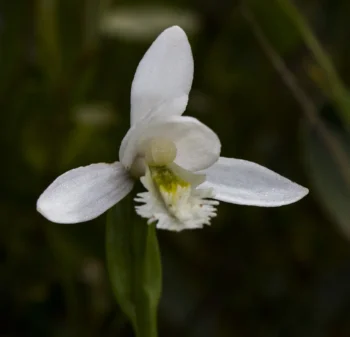
Snakemouth Orchid: A Rare Native Gem Best Admired in the Wild
If you’ve ever stumbled across a delicate pink orchid blooming in a bog or wetland and wondered what magical flower you’ve discovered, you might have encountered the enchanting snakemouth orchid (Pogonia ophioglossoides). This petite native beauty is one of North America’s most charming—and challenging—wildflowers.
What Makes the Snakemouth Orchid Special?
The snakemouth orchid is a perennial forb that belongs to the fascinating world of native orchids. Despite its exotic appearance, this little wonder is as American as apple pie, having called North America home long before European settlers arrived. The plant gets its intriguing name from its distinctive flower structure, which some say resembles a snake’s open mouth—though we think it looks more like nature’s own work of art!
This delicate orchid typically grows just 4-10 inches tall, producing a single, stunning pink flower (occasionally white) that blooms from late spring through summer. The flower features a beautifully fringed lip that seems almost too perfect to be real, making it a true showstopper in its natural habitat.
Where Does It Call Home?
The snakemouth orchid has an impressive native range, stretching across much of eastern North America. You can find this beauty growing naturally from Canada down through the eastern United States, including states like Maine, Florida, Texas, and many others in between. It’s truly a continental native, growing in places as diverse as Alabama, Manitoba, New Brunswick, Arkansas, and dozens of other states and provinces.
- Species observed
- No observations
A Wetland Specialist
Here’s where things get interesting (and challenging): the snakemouth orchid is what botanists call an obligate wetland plant. This means it almost always occurs in wetlands—think bogs, fens, wet meadows, and marshy areas. It’s perfectly adapted to these soggy conditions and wouldn’t be happy anywhere else.
This wetland preference makes perfect sense when you consider that the plant thrives in acidic, constantly moist soils and can handle both partial shade and full sun conditions. It’s found across USDA hardiness zones 3-9, showing remarkable adaptability to different climates while maintaining its wetland requirements.
Should You Try Growing It in Your Garden?
Here’s where we need to have a heart-to-heart conversation. While the snakemouth orchid is undeniably gorgeous and you might be tempted to add it to your native plant collection, this is one wildflower that’s best admired from afar. Here’s why:
- Rarity concerns: In some areas like Arkansas, the snakemouth orchid has a rarity status of S2, meaning it’s imperiled and vulnerable to extinction
- Cultivation challenges: This orchid has complex growing requirements, including specific mycorrhizal fungal partnerships that are nearly impossible to replicate in garden settings
- Low success rate: Even experienced orchid growers struggle with native bog orchids, as they often don’t survive transplantation or cultivation attempts
Better Alternatives for Your Wetland Garden
If you’re inspired by the snakemouth orchid and want to create habitat for native wetland plants, consider these more garden-friendly alternatives that will thrive in bog gardens or rain gardens:
- Blue flag iris (Iris versicolor)
- Swamp milkweed (Asclepias incarnata)
- Cardinal flower (Lobelia cardinalis)
- Wild bergamot (Monarda fistulosa)
- Turtlehead (Chelone glabra)
Supporting Snakemouth Orchids in the Wild
The best way to help snakemouth orchids is to protect their natural habitats. Support wetland conservation efforts, avoid disturbing bog ecosystems, and if you’re lucky enough to spot one during a nature walk, take photos instead of plants! These delicate beauties play important roles in their ecosystems, providing nectar for native pollinators and adding to the incredible biodiversity of North American wetlands.
Remember, some of nature’s most beautiful treasures are meant to stay wild. The snakemouth orchid is definitely one of them—a reminder that not everything needs to be brought home to be appreciated and loved.