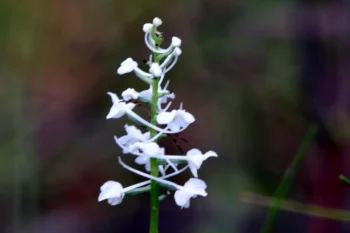
Snowy Orchid: A Rare Native Gem Worth Protecting
Have you ever stumbled upon a delicate spike of pure white flowers rising from a boggy meadow and wondered what magical plant you’ve discovered? Meet the snowy orchid (Platanthera nivea), one of North America’s most enchanting native wildflowers – and unfortunately, one of its most challenging to grow.
What Makes the Snowy Orchid Special
The snowy orchid is a perennial forb that produces elegant spikes of small, pristine white flowers that seem to glow against the backdrop of wetland grasses. This native beauty typically reaches 6-18 inches tall and blooms in late spring to early summer, creating ethereal displays in its natural bog and wet meadow habitats.
Also known by its botanical name Platanthera nivea, this orchid has several scientific synonyms including Gymnadeniopsis nivea and Habenaria nivea, reflecting its complex taxonomic history.
Where Does the Snowy Orchid Call Home?
This southeastern native has a range that spans from New Jersey down to Florida and west to Texas, including Alabama, Arkansas, Delaware, Georgia, Louisiana, Maryland, Mississippi, North Carolina, South Carolina, Tennessee, and Virginia. The snowy orchid thrives in the acidic, boggy conditions of the Atlantic and Gulf Coastal Plains.
- Species observed
- No observations
A Plant in Peril
Here’s where things get serious: the snowy orchid is becoming increasingly rare across its range. It’s listed as endangered in New Jersey and has concerning rarity rankings in Alabama (S2) and Arkansas (SH – historically present). This declining status makes it a plant that desperately needs our protection rather than our gardens.
Why Growing Snowy Orchids is Nearly Impossible
Even if you could source this rare beauty responsibly (which is extremely difficult), snowy orchids are notoriously challenging to cultivate. Here’s why:
- They require specific mycorrhizal fungal partnerships to survive
- Soil chemistry must be precisely acidic and nutrient-poor
- Moisture levels need to mimic natural bog conditions
- They’re adapted to very specific microclimates
The snowy orchid prefers facultative wetland conditions, meaning it usually grows in wetlands but can occasionally tolerate drier sites. It thrives in USDA hardiness zones 6-9 and needs the specialized conditions found in bogs, wet pine savannas, and seepage areas.
Supporting Pollinators and Wildlife
In its natural habitat, the snowy orchid plays an important role in supporting specialized native pollinators, particularly moths and certain butterfly species that have co-evolved with native orchids. These relationships are so specific that the plants often cannot reproduce without their particular pollinator partners.
What Can You Do Instead?
Rather than attempting to grow this rare orchid, consider these conservation-friendly alternatives:
- Support local bog and wetland conservation efforts
- Plant other native wetland species that are easier to grow and more readily available
- Visit natural areas where snowy orchids grow (but don’t disturb them!)
- Choose more common native orchids like pink lady’s slipper or showy orchis for your garden
The Bottom Line
The snowy orchid is one of those special plants that’s better admired in the wild than attempted in cultivation. Its rarity status and extremely specific growing requirements make it unsuitable for home gardens. Instead of trying to grow this challenging beauty, focus your native gardening efforts on more garden-friendly species while supporting the conservation of natural habitats where snowy orchids can thrive undisturbed.
Sometimes the best way to love a plant is to leave it exactly where nature intended it to be.