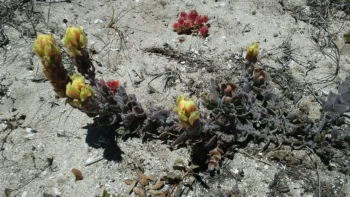
Softleaf Indian Paintbrush: A Rare California Treasure Worth Protecting
If you’ve ever dreamed of adding a truly unique native plant to your California garden, the softleaf Indian paintbrush (Castilleja mollis) might catch your eye. But before you start planning where to plant it, there’s something crucial you need to know about this remarkable perennial herb.
A Plant on the Brink
Here’s the reality check: softleaf Indian paintbrush isn’t just rare—it’s critically imperiled. With a global conservation status of S1 and listed as endangered in the United States, this plant is hanging on by a thread. We’re talking about five or fewer known populations and fewer than 1,000 individuals remaining in the wild. That’s not just rare; that’s every single plant matters rare.
So while we absolutely want to celebrate and protect this species, growing it comes with serious responsibilities.
Where This Beauty Calls Home
Softleaf Indian paintbrush is a California endemic, meaning it exists nowhere else on Earth. This perennial forb has made its home exclusively in the Golden State, primarily along coastal areas and on the Channel Islands.
- Species observed
- No observations
What Makes It Special
Like other Indian paintbrush species, Castilleja mollis gets its common name from those distinctive colorful bracts that look like someone dipped a paintbrush in vibrant pigment. The softleaf part comes from its characteristically fuzzy, soft foliage that sets it apart from its relatives.
As a perennial forb herb, this plant lacks significant woody tissue and maintains its life from year to year through underground structures. It’s perfectly adapted to California’s coastal climate and has evolved some fascinating survival strategies.
The Hemiparasitic Twist
Here’s where things get interesting (and challenging): softleaf Indian paintbrush is what botanists call hemiparasitic. This means it can photosynthesize like other plants, but it also taps into the root systems of nearby host plants to supplement its nutrition. This unique lifestyle makes it incredibly difficult to grow successfully without the right companion plants and conditions.
Should You Grow Softleaf Indian Paintbrush?
The short answer is: only if you’re deeply committed to conservation and can source it responsibly. Given its endangered status, this isn’t a plant for casual gardening experiments. If you’re considering growing it, here’s what you need to know:
- Only obtain plants or seeds from legitimate conservation programs or botanical gardens
- Never collect from wild populations
- Be prepared for a challenging growing experience
- Consider it a conservation effort rather than typical gardening
Growing Conditions and Care
If you do obtain softleaf Indian paintbrush through proper conservation channels, you’ll need to recreate its native coastal California conditions:
- Climate: USDA hardiness zones 9-10, with cool, moist winters and dry summers
- Sunlight: Full sun to partial shade
- Soil: Well-draining soils that mimic coastal conditions
- Host plants: Requires compatible native plants nearby to establish its parasitic relationships
- Water: Minimal summer irrigation once established, following natural rainfall patterns
Wildlife Benefits
When successfully established, softleaf Indian paintbrush provides important ecological benefits. Its colorful bracts attract hummingbirds, which serve as primary pollinators, and various native bees also visit the flowers. In its natural habitat, it plays a crucial role in coastal ecosystem food webs.
The Conservation Perspective
Rather than trying to grow this endangered species in your garden, consider supporting its conservation in other ways:
- Support organizations working to protect its natural habitat
- Choose other native Castilleja species that are more common and easier to grow
- Volunteer with local botanical gardens or conservation groups
- Help spread awareness about California’s endangered plants
Native Alternatives to Consider
If you’re drawn to the Indian paintbrush aesthetic but want something more appropriate for home gardens, consider these alternatives:
- Desert paintbrush (Castilleja chromosa) for inland areas
- Giant red paintbrush (Castilleja miniata) for mountain regions
- Seaside paintbrush (Castilleja latifolia) for coastal gardens
The Bottom Line
Softleaf Indian paintbrush is undeniably fascinating and beautiful, but it’s also a plant that needs our protection more than our cultivation. If you’re passionate about rare native plants, the best way to help is by supporting conservation efforts and choosing more sustainable native alternatives for your garden.
Sometimes the most loving thing we can do for a plant is to admire it in its natural habitat and work to protect the wild places it calls home. For softleaf Indian paintbrush, that’s exactly what it needs most.