Southern Coastal Violet: A Charming Native Groundcover for Shady Spots
If you’re looking for a delicate, low-maintenance groundcover that brings both beauty and ecological value to your garden, the southern coastal violet (Viola septemloba) might just be your new favorite native plant. This charming perennial forb offers lovely purple blooms and distinctive foliage that can brighten up those tricky shaded areas where many other plants struggle to thrive.
What Makes Southern Coastal Violet Special?
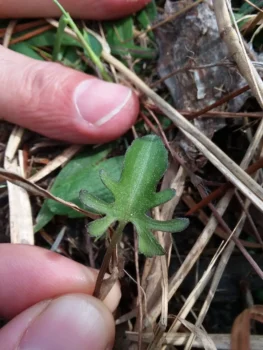
Southern coastal violet stands out from other violets thanks to its deeply divided, lobed leaves that give it its scientific name septemloba (meaning seven-lobed). While the leaves may have 5-7 lobes, they create an intricate, almost fern-like texture that’s quite distinctive. The small but abundant purple-blue flowers with their characteristic violet shape and darker veining appear in spring, creating a carpet of color in woodland settings.
As a native perennial forb, this violet lacks woody stems but returns year after year from its root system, making it a reliable addition to your landscape. It’s a true native to the lower 48 states, which means it’s perfectly adapted to local growing conditions and supports native wildlife.
Where Does It Grow Naturally?
Southern coastal violet has quite an impressive range across the southeastern United States. You’ll find it growing naturally in Alabama, Florida, Georgia, Louisiana, Mississippi, North Carolina, South Carolina, Tennessee, and Texas, with some populations even reaching as far north as Rhode Island. This wide distribution speaks to its adaptability and resilience.
- Species observed
- No observations
Perfect Spots in Your Garden
This versatile violet works beautifully in several garden situations:
- Woodland gardens: Creates a natural carpet under trees and shrubs
- Shade gardens: Thrives where sun-loving plants struggle
- Rain gardens: Its wetland tolerance makes it perfect for areas that collect water
- Native plant gardens: Fits perfectly with other southeastern natives
- Naturalized areas: Great for low-maintenance, natural-looking landscapes
Growing Conditions and Care
One of the best things about southern coastal violet is how easy-going it is about growing conditions. It thrives in USDA hardiness zones 6-9, making it suitable for most of the southeastern and mid-Atlantic regions.
Light requirements: Partial to full shade (perfect for those challenging spots!)
Soil needs: This violet is quite flexible about soil types, tolerating everything from sandy coastal soils to heavier clay. The key is consistent moisture.
Water requirements: As its wetland status suggests, southern coastal violet prefers moist to wet conditions. In the Atlantic and Gulf Coastal Plain, it can handle both wetland and drier conditions, while in other regions it leans more heavily toward consistently moist spots.
Planting and Establishment Tips
Getting southern coastal violet established in your garden is refreshingly straightforward:
- Plant in spring or fall when temperatures are moderate
- Choose a spot with partial to full shade
- Ensure consistent moisture, especially during the first growing season
- Space plants about 6-12 inches apart for groundcover effect
- Mulch lightly to retain moisture and suppress weeds
Once established, this violet is remarkably low-maintenance. It may self-seed in favorable conditions, gradually expanding your groundcover naturally.
Wildlife and Pollinator Benefits
Southern coastal violet isn’t just pretty – it’s also a valuable part of the ecosystem. The flowers attract various pollinators including small bees and butterflies. Perhaps most importantly, violets serve as host plants for several species of fritillary butterflies, whose caterpillars depend on violet leaves for survival. By planting this native violet, you’re supporting the complete life cycle of these beautiful butterflies.
Why Choose Southern Coastal Violet?
If you’re still on the fence, here are the top reasons to consider adding southern coastal violet to your landscape:
- True native plant that supports local ecosystems
- Thrives in challenging shady, moist conditions
- Low-maintenance once established
- Provides both spring flowers and interesting foliage texture
- Supports butterfly reproduction
- Excellent for naturalistic landscaping
- Helps with erosion control in moist areas
The Bottom Line
Southern coastal violet proves that sometimes the most unassuming plants can be the most valuable additions to your garden. While it may not be the showiest flower in your landscape, its combination of native credentials, wildlife benefits, and adaptability to challenging growing conditions makes it a smart choice for gardeners who want beauty with purpose. Plus, there’s something deeply satisfying about growing a plant that’s perfectly at home in your local environment – it’s gardening in harmony with nature at its finest.