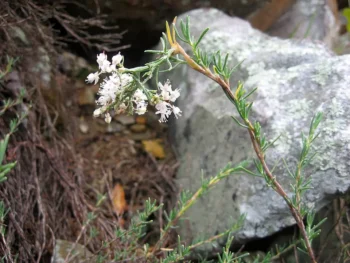
Southern Jointweed: A Hidden Gem for Native Plant Enthusiasts
If you’re looking to add a delicate yet resilient native plant to your landscape, southern jointweed might just be the perfect choice. This charming little shrub brings understated beauty and important ecological value to gardens across much of the southeastern United States.
What Is Southern Jointweed?
Southern jointweed (Polygonella americana) is a low-growing perennial shrub that typically stays under 1.5 feet tall, though it can occasionally reach up to 3 feet at maturity. Don’t let its modest size fool you – this native plant packs a lot of character into its compact frame. With its fine-textured foliage and clusters of small white to pink flowers, it adds a delicate, almost ethereal quality to any planting.
You might also see this plant listed under its scientific synonym, Gonopyrum americanum, in older botanical references, but Polygonella americana is the accepted name today.
Where Does Southern Jointweed Call Home?
This native beauty has quite an impressive range across the lower 48 states, naturally occurring in Alabama, Arkansas, Florida, Georgia, Indiana, Louisiana, Mississippi, Missouri, New Mexico, North Carolina, Oklahoma, South Carolina, Tennessee, and Texas. That’s a pretty wide distribution for such a specialized little plant!
- Species observed
- No observations
A Word About Rarity
Here’s something important to know: southern jointweed is considered critically imperiled (S1 status) in Alabama. If you’re gardening in Alabama or sourcing plants from there, make sure you’re working with reputable nurseries that propagate their plants responsibly rather than collecting from wild populations. This plant deserves our protection, and growing it in our gardens can actually help support its conservation when done thoughtfully.
Why Your Garden (and Local Wildlife) Will Love It
Southern jointweed is a pollinator magnet, attracting native bees, butterflies, and other beneficial insects with its sweet nectar. The plant blooms with dense clusters of tiny flowers that might look modest individually but create quite the show when grouped together. It’s the kind of plant that makes you stop and take a closer look – and your local pollinators will definitely appreciate the pit stop.
As a low-growing shrub, southern jointweed works beautifully as:
- Groundcover in naturalized areas
- Erosion control on slopes
- A delicate accent in native plant gardens
- Part of a drought-tolerant landscape design
Growing Southern Jointweed Successfully
The good news is that southern jointweed is relatively low-maintenance once you understand its preferences. This plant thrives in USDA hardiness zones 6 through 9, making it suitable for a good portion of its native range.
Getting the Growing Conditions Right
Think sunny and sandy when it comes to southern jointweed’s ideal growing conditions. This plant loves:
- Full sun exposure
- Well-drained, sandy soils
- Good air circulation
- Minimal foot traffic (it’s not built for heavy use areas)
Once established, southern jointweed is quite drought tolerant, making it an excellent choice for water-wise landscaping. However, like most plants, it will appreciate some water during extended dry spells while it’s getting established.
Planting and Care Tips
Southern jointweed is refreshingly easy to care for. Here’s what you need to know:
- Plant in spring after the last frost date
- Ensure excellent drainage – soggy soil is this plant’s enemy
- Water regularly the first year, then let nature take over
- Minimal pruning needed; just remove any dead or damaged growth
- No fertilizer necessary – it actually prefers lean soils
The key to success with southern jointweed is remembering that less is often more. This is a plant that thrives on benign neglect once it’s settled in.
Is Southern Jointweed Right for Your Garden?
Southern jointweed is perfect for gardeners who want to support native wildlife while adding subtle beauty to their landscape. It’s especially well-suited for naturalized areas, native plant gardens, and xeriscapes where its delicate texture can shine without competing with showier plants.
If you’re gardening within its native range and can source plants responsibly, southern jointweed offers the satisfaction of growing a true native that supports local ecosystems. Just remember to be patient – like many native plants, it may take a season or two to really hit its stride, but the wait is worth it for both you and your local pollinators.