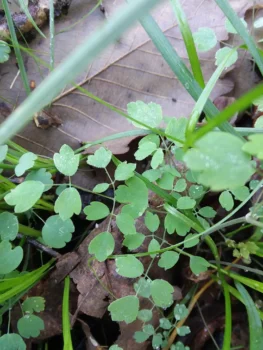
Southern Meadow-Rue: A Rare Southeastern Treasure Worth Protecting
If you’ve stumbled across the name southern meadow-rue while researching native plants for your garden, you might be wondering if this delicate-sounding perennial could be the perfect addition to your landscape. Well, here’s where things get interesting – and a bit complicated.
What is Southern Meadow-Rue?
Southern meadow-rue (Thalictrum debile) is a native perennial forb that belongs to the buttercup family. As a forb, it’s an herbaceous plant that lacks significant woody growth, with its growing buds positioned at or below ground level to help it survive through seasons. This charming plant is truly American-born, native to the lower 48 states, though its current range tells a more sobering story.
Where Does It Grow?
Southern meadow-rue has an extremely limited geographic distribution, found only in Alabama, Georgia, and Mississippi. This tiny range is already a red flag for plant enthusiasts, but the story gets even more concerning.
- Species observed
- No observations
The Rarity Reality Check
Here’s the crucial information every gardener needs to know: southern meadow-rue is considered imperiled, with a Global Conservation Status of S2. This means it’s extremely rare and vulnerable to extinction, typically occurring in only 6 to 20 locations with just 1,000 to 3,000 remaining individuals. In Alabama, it holds the same imperiled S2 status.
What does this mean for you as a gardener? Simply put, this isn’t a plant you should be casually adding to your weekend shopping list. Its rarity means it needs protection in the wild rather than cultivation in gardens.
Growing Conditions and Habitat
Southern meadow-rue has a facultative wetland status in both the Atlantic and Gulf Coastal Plain region and the Eastern Mountains and Piedmont region. This means it can grow in both wetland and non-wetland environments, giving it some flexibility in moisture conditions. However, like most of its meadow-rue cousins, it likely prefers:
- Partially shaded locations
- Moist, well-draining soils
- Areas with consistent moisture without waterlogging
Should You Plant Southern Meadow-Rue?
The short answer is: probably not. Given its imperiled status and extremely limited natural range, southern meadow-rue should only be grown with responsibly sourced material as part of conservation efforts. Casual gardening with this species could potentially harm wild populations if plants are collected from nature.
Better Native Alternatives
If you’re drawn to the idea of growing a native meadow-rue, consider these more common alternatives that won’t raise conservation concerns:
- Tall meadow-rue (Thalictrum pubescens) – A robust native with feathery foliage and clouds of small flowers
- Early meadow-rue (Thalictrum dioicum) – A spring bloomer perfect for woodland gardens
- Purple meadow-rue (Thalictrum dasycarpum) – Offers similar delicate beauty with purple-tinged stems
The Conservation Connection
Sometimes the best way to support a native plant is to admire it from afar and support conservation efforts rather than trying to grow it ourselves. Southern meadow-rue represents the fragile nature of our native plant heritage – a reminder that not every beautiful native species is meant for our garden beds.
If you’re passionate about native plants and conservation, consider supporting organizations that work to protect rare species like southern meadow-rue in their natural habitats. Your garden can still make a difference by featuring other native plants that support local ecosystems while leaving the rarest treasures to dedicated conservation professionals.
The Bottom Line
Southern meadow-rue is undoubtedly a special plant – so special, in fact, that it deserves our protection more than our cultivation. By choosing more common native alternatives for your garden, you’re making a responsible choice that supports biodiversity without putting pressure on an already struggling species. Sometimes the most caring thing we can do as gardeners is to appreciate a plant’s beauty while giving it the space it needs to survive in the wild.