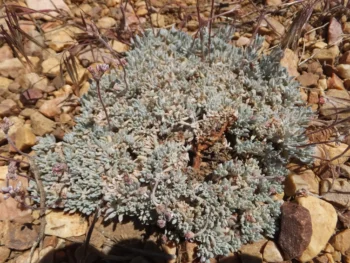
Southern Mountain Buckwheat: A Rare California Native Worth Protecting
Meet the southern mountain buckwheat (Eriogonum kennedyi var. austromontanum), a charming little perennial that’s as tough as the rocky mountain slopes it calls home. This California native might be small in stature, but it packs a big punch when it comes to drought tolerance and pollinator appeal. However, before you rush to add this beauty to your garden, there’s something important you need to know about its conservation status.
What Makes Southern Mountain Buckwheat Special?
This delightful forb herb belongs to the buckwheat family and showcases the classic traits that make California natives so appealing to eco-conscious gardeners. With its silvery-gray foliage and clusters of small white to pink flowers, southern mountain buckwheat creates an elegant, understated presence in any drought-tolerant landscape.
As a perennial, this plant will return year after year once established, making it a worthwhile investment for patient gardeners who appreciate low-maintenance beauty.
Where Does It Come From?
Southern mountain buckwheat is exclusively native to California, where it naturally occurs in the mountainous regions of Southern California. You’ll find it thriving in the San Bernardino and San Gabriel Mountains, clinging to rocky slopes and proving that sometimes the most beautiful plants grow in the toughest conditions.
- Species observed
- No observations
A Conservation Concern
Important Notice: Southern mountain buckwheat has a threatened conservation status, which means this species faces significant challenges in the wild. If you’re considering adding this plant to your garden, it’s crucial that you source it responsibly from reputable native plant nurseries that propagate from legally collected seeds or cuttings. Never collect plants or seeds from wild populations.
By choosing to grow this threatened species responsibly, you’re actually contributing to conservation efforts by maintaining genetic diversity and reducing pressure on wild populations.
Perfect for Specialized Gardens
Southern mountain buckwheat isn’t your typical suburban landscape plant, and that’s exactly what makes it special. This little gem shines in:
- Rock gardens where its compact form complements stones and boulders
- Xeriscape designs that celebrate water-wise gardening
- Native plant gardens focused on California flora
- Mediterranean-style landscapes that embrace drought-tolerant beauty
Think of it as nature’s answer to ground cover that actually looks intentional rather than like you forgot to plant something more exciting.
Pollinator Magnet
Don’t let its modest appearance fool you – southern mountain buckwheat is a pollinator powerhouse. The small flowers attract native bees, butterflies, and other beneficial insects, making your garden a valuable habitat island for local wildlife. In a world where pollinators need all the help they can get, every flower counts.
Growing Conditions: Less is More
Southern mountain buckwheat thrives in USDA hardiness zones 8-10, making it suitable for mild winter climates. The key to success with this plant is remembering its mountain origins – it’s adapted to tough conditions, not garden pampering.
Soil requirements: Well-draining soil is absolutely critical. Think sandy, rocky, or amended clay that won’t hold water around the roots. If water sits around this plant’s feet, you’ll likely lose it to root rot.
Sun exposure: Full sun is preferred, though it can tolerate some light shade in hotter climates.
Water needs: Once established, this plant is remarkably drought-tolerant. In fact, overwatering is one of the fastest ways to kill it.
Planting and Care Tips
Successfully growing southern mountain buckwheat is all about mimicking its natural habitat:
- Drainage first: If your soil doesn’t drain well naturally, plant in raised beds or mounds, or amend heavily with sand and gravel
- Water sparingly: Water deeply but infrequently during the first year to establish roots, then cut back dramatically
- Skip the fertilizer: This plant evolved in nutrient-poor soils and doesn’t need (or want) rich feeding
- Mulch carefully: Use gravel or decomposed granite mulch rather than organic materials that retain moisture
- Pruning: Minimal pruning needed – just remove spent flower heads if desired
The Bottom Line
Southern mountain buckwheat is a fascinating choice for gardeners who want to support conservation while creating beautiful, sustainable landscapes. Its threatened status means you’ll need to be extra thoughtful about sourcing, but the reward is a unique, low-maintenance plant that connects your garden to California’s mountain ecosystems.
If you can provide the well-draining conditions it craves and resist the urge to over-pamper it, southern mountain buckwheat will reward you with subtle beauty and the satisfaction of knowing you’re helping preserve a piece of California’s natural heritage.