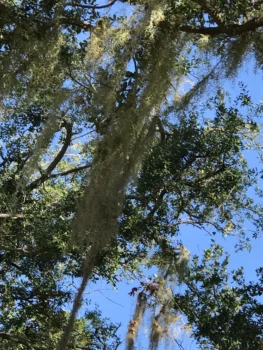
Spanish Moss: The Mystical Air Plant That Transforms Southern Landscapes
Few plants capture the romantic essence of the American South quite like Spanish moss. Despite its common name, this ethereal beauty isn’t actually moss at all—it’s Tillandsia usneoides, a fascinating air plant that belongs to the bromeliad family. With its silvery-gray strands cascading gracefully from tree branches, Spanish moss creates an instantly recognizable and enchanting atmosphere in any landscape.
A True Native with Impressive Range
Spanish moss is a genuine native species across much of the southeastern United States, naturally occurring in Alabama, Arkansas, Florida, Georgia, Louisiana, Maryland, Mississippi, North Carolina, South Carolina, Texas, Virginia, Puerto Rico, and the U.S. Virgin Islands. This perennial plant has been gracing our landscapes for centuries, making it an excellent choice for gardeners seeking authentic regional character.
- Species observed
- No observations
What Makes Spanish Moss Special
This remarkable plant is technically classified as a forb herb, though it behaves quite unlike any typical garden herb. Spanish moss is an epiphyte, meaning it grows on other plants (usually trees) without being parasitic. It absorbs moisture and nutrients directly from the air and rain, requiring no soil whatsoever. The plant produces small, inconspicuous white flowers in late summer, followed by tiny black seeds that disperse on the wind.
Aesthetic Appeal and Garden Role
Spanish moss brings unmatched drama and atmosphere to landscapes. Its thread-like, silvery-gray foliage creates:
- Instant vertical interest and movement
- A mystical, old-world charm
- Beautiful textural contrast against tree bark and other foliage
- Atmospheric lighting effects as sunlight filters through the strands
- Year-round visual appeal with dense, persistent foliage
Perfect Garden Settings
Spanish moss thrives in several landscape styles:
- Traditional Southern gardens
- Woodland and shade gardens
- Tropical and subtropical landscapes
- Naturalistic designs
- Moon gardens where its silvery color glows in evening light
Growing Conditions and Care
One of Spanish moss’s greatest appeals is its low-maintenance nature. Here’s what it needs to thrive:
Climate Requirements: Hardy in USDA zones 8-11, Spanish moss requires a minimum of 300 frost-free days per year and temperatures above 22°F.
Light and Location: This shade-tolerant plant actually prefers filtered light and can handle dense shade conditions. It’s perfect for those tricky spots under large trees where other plants struggle.
Moisture Needs: Spanish moss requires medium moisture levels and benefits from annual precipitation between 40-75 inches. It prefers acidic conditions with a pH between 6.0-6.9.
Air Circulation: Good airflow is essential for preventing fungal issues and keeping the plant healthy.
Wetland Compatibility
Spanish moss shows interesting regional variation in its wetland preferences. In the Atlantic and Gulf Coastal Plain, it’s considered facultative, meaning it can grow in both wetland and upland areas. However, in most other regions, it’s classified as an obligate upland plant that rarely occurs in wetlands.
Planting and Propagation
Getting started with Spanish moss is surprisingly simple:
Propagation Methods: Spanish moss can be propagated by seed or cuttings. Seeds are tiny (about 1.2 million per pound!) and spread naturally by wind, while cuttings can be taken and simply draped over suitable host trees.
Installation: Simply drape sections of Spanish moss over tree branches, particularly those of oak, cypress, or other suitable host trees. The plant will naturally attach and begin growing.
Spacing: Plant density can range from 3,450 to 7,000 plants per acre, depending on your desired coverage.
Wildlife and Ecological Benefits
While specific wildlife benefit data isn’t extensively documented, Spanish moss provides important ecological services. Small insects visit its modest flowers during the late summer bloom period, and the dense strands offer nesting material and shelter for various birds and small creatures. The plant’s presence indicates a healthy, humid ecosystem.
Potential Drawbacks to Consider
Spanish moss isn’t right for every garden situation:
- Growth rate is slow, so patience is required for full establishment
- Limited commercial availability means sourcing can be challenging
- Requires specific climate conditions and may not survive in areas with harsh winters
- Can become heavy when wet, potentially stressing smaller tree branches
- May harbor chiggers or other small insects
The Bottom Line
Spanish moss is a magical addition to appropriate landscapes, offering authentic regional character with minimal care requirements. If you live within its native range and have suitable trees for support, this atmospheric air plant can transform your garden into a enchanted Southern paradise. Just remember that slow growth means starting with enough material to create immediate impact, and always source your Spanish moss responsibly—preferably from reputable nurseries rather than wild collection.
For gardeners seeking that quintessential Southern mystique, few plants deliver the romance and drama of Spanish moss swaying gently in a warm breeze.