Discovering Sphagnum: The Remarkable Bog Moss That’s Both Helper and Rarity
If you’ve ever wondered about those spongy, cushiony patches of greenery in wetland areas, you’ve likely encountered sphagnum moss. Among these fascinating plants is Sphagnum strictum, a native North American species that plays a crucial role in bog ecosystems while presenting both opportunities and responsibilities for gardeners interested in wetland gardening.
What Exactly Is Sphagnum strictum?
Sphagnum strictum, commonly known simply as sphagnum, is a specialized moss species that belongs to a remarkable group of plants. Unlike your typical garden plants, this moss is what botanists call a bryophyte – a terrestrial green plant that reproduces through spores rather than seeds or flowers. It often attaches itself to rocks, wood, or other solid surfaces rather than growing directly in soil.
This particular species was previously known by the synonym Sphagnum garberi, so you might encounter it under that name in older gardening or botanical references.
Where Does This Bog Moss Call Home?
Sphagnum strictum is native to North America and has quite an impressive range. You can find this moss naturally occurring across the eastern part of the continent, from the maritime provinces of New Brunswick, Nova Scotia, and Newfoundland down through the eastern United States. Its range includes Alabama, Florida, Georgia, Louisiana, Maine, Maryland, New Jersey, North Carolina, South Carolina, and Virginia.
- Species observed
- No observations
A Word of Caution: This Moss Is Rare
Here’s where things get serious for a moment. In New Jersey, Sphagnum strictum holds an endangered status and is listed as S1, meaning it’s critically imperiled in the state. It’s also specially protected in both the Pinelands and Highlands regions. This rarity status means that if you’re interested in incorporating this moss into your garden, you must be extremely careful about sourcing.
Never collect this moss from the wild. Instead, work only with reputable suppliers who can provide responsibly propagated material or laboratory-grown specimens.
Identifying Sphagnum strictum
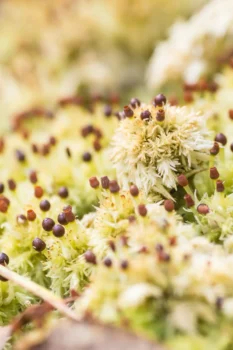
So how do you spot this special moss? Sphagnum strictum forms dense, cushion-like mats that can range in color from pale green to reddish-brown, depending on growing conditions and maturity. The moss creates a spongy texture that can hold incredible amounts of water – up to 20 times its dry weight!
Look for these identifying features:
- Dense, cushiony growth pattern
- Pale green to reddish-brown coloration
- Extremely spongy, water-retentive texture
- Preference for very wet, acidic conditions
- Often found in bog environments or similar wetland settings
Is Sphagnum strictum Beneficial for Gardens?
Absolutely! If you’re working on bog gardens, wetland restoration, or specialized acidic water features, sphagnum mosses like Sphagnum strictum can be incredibly valuable. Here’s why:
- Natural water regulation: These mosses act like living sponges, helping to maintain consistent moisture levels
- pH modification: Sphagnum naturally acidifies its environment, creating the perfect conditions for acid-loving plants
- Ecosystem foundation: In bog gardens, sphagnum moss forms the foundation that supports other specialized plants
- Educational value: Having this moss in your garden provides opportunities to learn about unique ecosystems
Creating the Right Conditions
If you’re considering adding Sphagnum strictum to a specialized garden setting, understand that this isn’t your typical garden addition. This moss requires very specific conditions:
- Constant moisture: Think soggy rather than just moist
- Highly acidic conditions: pH levels between 3.5 and 5.5
- High humidity: These mosses love humid environments
- Pure water: Use distilled or rainwater rather than tap water
- Indirect light: Bright but not harsh direct sunlight
The Bottom Line
Sphagnum strictum is a fascinating native moss that can add authentic ecological value to specialized bog gardens and wetland restoration projects. However, its endangered status in parts of its range means that any gardening use must be approached with responsibility and respect for conservation efforts.
If you’re passionate about wetland gardening and can provide the specialized conditions this moss needs, seek out responsibly sourced material from reputable suppliers. Your bog garden will benefit from the authentic ecosystem foundation that sphagnum moss provides, and you’ll be supporting conservation efforts through responsible cultivation.
Remember: when it comes to rare native plants like Sphagnum strictum, we’re not just gardeners – we’re stewards helping to preserve these remarkable species for future generations.