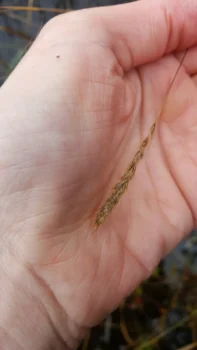
Spiked Muhly: A Native Grass Perfect for Wet Spots in Your Garden
If you’ve been searching for a native grass that thrives in those perpetually soggy spots in your yard, let me introduce you to spiked muhly (Muhlenbergia glomerata). This unassuming perennial grass might not win any flashy flower contests, but it’s absolutely brilliant at what it does best: turning wet, problematic areas into naturalistic beauty.
What Is Spiked Muhly?
Spiked muhly is a medium-textured perennial grass that grows in distinctive clumps, spreading slowly through underground rhizomes. Reaching about 3 feet tall at maturity, this native grass produces delicate yellow flowers in late spring that give way to brown seeds through summer and fall. Don’t expect showy blooms—this plant’s charm lies in its graceful, fine-textured foliage and its incredible adaptability to wet conditions.
Where Spiked Muhly Calls Home
This grass is a true North American native with an impressively wide range. You’ll find it naturally growing from coast to coast, spanning from Canadian provinces like Alberta and British Columbia all the way down through most of the lower 48 states, including everywhere from Maine to Oregon and from North Dakota to North Carolina. It even grows as far north as the Northwest Territories and Yukon!
- Species observed
- No observations
However, if you’re gardening in New Jersey, take note: spiked muhly has a rarity status there (listed as S2 in the Highlands region). If you’re in New Jersey and want to grow this grass, make sure you source it responsibly from reputable native plant nurseries rather than collecting from wild populations.
Why Your Garden (and Local Wildlife) Will Love It
Spiked muhly shines in wet conditions where other plants struggle. Its wetland status varies by region—in most areas, it’s classified as facultative wetland, meaning it usually grows in wetlands but can handle drier spots too. In the Northcentral and Northeast regions, it’s even classified as obligate wetland, meaning it almost always needs wet conditions.
This makes it perfect for:
- Rain gardens and bioswales
- Pond or stream margins
- Low-lying areas that collect water
- Prairie and meadow restorations
- Naturalized landscape areas
While grasses don’t typically attract as many pollinators as flowering plants, spiked muhly still supports the ecosystem by providing habitat and seeds for birds and beneficial insects.
Growing Conditions That Make Spiked Muhly Happy
This grass is remarkably cold-hardy, tolerating temperatures down to -33°F, which means it’ll thrive in USDA hardiness zones 3 and warmer. Here’s what it needs to flourish:
- Soil: Adaptable to fine and medium-textured soils, with a pH range of 5.3 to 7.5
- Moisture: Loves consistent moisture and can handle periodic flooding
- Sun: Tolerates partial shade but grows best with good light
- Precipitation: Thrives in areas receiving 30-50 inches of annual rainfall
The good news? Once established, spiked muhly has a moderate growth rate and doesn’t require fussing. It’s not drought-tolerant, so don’t plant it in dry spots, but in the right moist conditions, it’s practically maintenance-free.
Planting and Care Tips
Spiked muhly is typically grown from seed, and with about 750,000 seeds per pound, a little goes a long way! Here’s how to succeed with this grass:
- Timing: Plant seeds in late fall or early spring
- Germination: Be patient—seedling vigor is low, so germination can be slow and spotty
- Spacing: Allow room for the rhizomatous growth habit to fill in naturally
- Fertilization: Medium fertility requirements—avoid over-fertilizing
- Maintenance: Cut back in late winter or early spring before new growth begins
The grass is commercially available from native plant suppliers, though you might need to search a bit since it’s not as common as some other native grasses.
Is Spiked Muhly Right for Your Garden?
Choose spiked muhly if you have consistently moist to wet areas in your landscape and want a low-maintenance native plant that provides natural texture and movement. It’s perfect for gardeners embracing naturalistic design and anyone working on ecological restoration projects.
Skip this grass if you have dry conditions—it simply won’t thrive without adequate moisture. Also, if you’re looking for immediate visual impact or showy flowers, this subtle beauty might not be your best choice.
For wet spots that challenge other plants, though, spiked muhly offers an elegant, native solution that connects your garden to the broader ecosystem while requiring minimal care from you. Sometimes the best plants are the ones that simply do their job beautifully without asking for much in return.