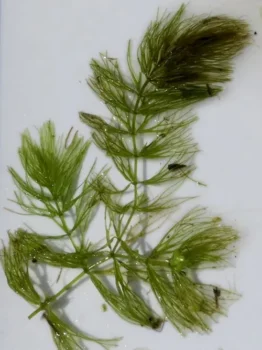
Spineless Hornwort: A Native Aquatic Treasure for Water Gardens
If you’re looking to add authentic North American character to your pond or water garden, spineless hornwort (Ceratophyllum echinatum) might be exactly what you need. This fascinating native aquatic plant brings underwater elegance to freshwater features while supporting local ecosystems.
What Is Spineless Hornwort?
Spineless hornwort is a perennial forb that lives its entire life submerged beneath the water’s surface. Unlike many garden plants, this underwater wonder lacks significant woody tissue and instead produces delicate, feathery foliage arranged in distinctive whorls around slender stems. Don’t let the spineless name fool you – this plant has plenty of character!
You might also encounter this species listed under its botanical synonyms, including Ceratophyllum demersum var. echinatum or Ceratophyllum submersum var. echinatum, but they all refer to the same remarkable aquatic plant.
Where Does It Naturally Grow?
Spineless hornwort is native to both Canada and the lower 48 states, making it a truly North American species. Its natural range spans an impressive territory, from British Columbia to Nova Scotia in Canada, and throughout most of the United States including Alabama, Arkansas, Connecticut, Delaware, Florida, Georgia, Illinois, Indiana, Kansas, Kentucky, Louisiana, Maine, Maryland, Massachusetts, Michigan, Minnesota, Mississippi, Missouri, New Hampshire, New Jersey, New York, North Carolina, Ohio, Oklahoma, Oregon, Pennsylvania, Rhode Island, South Carolina, Tennessee, Texas, Vermont, Virginia, Washington, West Virginia, and Wisconsin.
- Species observed
- No observations
Important Conservation Note
Before you rush to add this plant to your water garden, there’s something crucial to know: spineless hornwort is considered endangered in New Jersey, where it holds a rarity status of S2S3 and is listed as endangered in both the Pinelands and Highlands regions. If you’re interested in growing this species, please ensure you source it responsibly from reputable nurseries that don’t harvest from wild populations.
Perfect for Water Gardens
As an obligate wetland species, spineless hornwort requires permanent submersion in freshwater environments. This makes it ideal for:
- Natural-style ponds and water gardens
- Large aquariums and indoor water features
- Wetland restoration projects
- Native plant water gardens
The plant’s feathery, whorled leaves create beautiful underwater texture and movement, adding visual interest to submerged areas of water features that might otherwise appear barren.
Growing Conditions and Care
Spineless hornwort thrives in still or slow-moving freshwater environments. Based on its wide geographic distribution, it’s adaptable to USDA hardiness zones 4-10, making it suitable for most North American water gardens.
Key growing requirements include:
- Complete submersion in freshwater
- Still or gently flowing water
- Neutral to slightly alkaline water pH
- Protection from strong currents
Planting and Propagation
Unlike terrestrial plants, spineless hornwort doesn’t require traditional planting in soil. Instead, stem fragments can be simply placed in your water feature where they’ll naturally establish. The plant typically propagates through stem fragmentation, making it relatively easy to spread once established.
Since this species can be challenging to source due to its conservation status in some areas, consider contacting native plant societies or specialized aquatic plant nurseries for responsibly propagated specimens.
Wildlife and Ecosystem Benefits
While spineless hornwort’s pollinator benefits may be limited due to its submerged lifestyle and inconspicuous flowers, it likely provides important habitat for aquatic insects, small fish, and other water-dwelling creatures. Native aquatic plants like this one play crucial roles in maintaining healthy freshwater ecosystems.
Is Spineless Hornwort Right for Your Water Garden?
If you have a pond, water garden, or large aquatic feature and want to incorporate native North American plants, spineless hornwort could be an excellent choice. Its widespread native range means it’s well-adapted to various climatic conditions, and its unique underwater foliage adds authentic natural beauty to aquatic landscapes.
Just remember to source this plant responsibly and consider its conservation status. By choosing native aquatic plants like spineless hornwort, you’re not only creating a beautiful water feature but also supporting local biodiversity and honoring North America’s natural aquatic heritage.