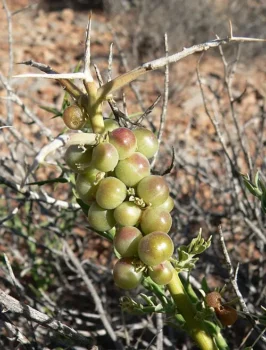
Spiny Menodora: A Thorny Desert Beauty for Water-Wise Gardens
If you’re looking for a tough-as-nails native shrub that laughs in the face of drought, let me introduce you to spiny menodora (Menodora spinescens). This prickly little character might not win any popularity contests, but it’s exactly the kind of resilient plant that desert gardeners dream about.
What Is Spiny Menodora?
Spiny menodora is a perennial shrub that’s perfectly adapted to life in some of America’s harshest landscapes. True to its name, this plant is armed with thorns and built for survival. It typically grows as a multi-stemmed woody shrub, usually staying under 13 feet tall, though most specimens are much more compact in garden settings.
This native gem belongs to the olive family and produces small, cheerful yellow flowers that seem almost impossibly delicate considering the plant’s tough exterior. It’s like finding a hidden smile on the grumpiest person you know.
Where Does Spiny Menodora Call Home?
Spiny menodora is native to the southwestern United States, specifically thriving in Arizona, California, Nevada, and Utah. It’s perfectly at home in the Mojave and Sonoran desert regions, where it has spent millennia learning how to make the most of every precious drop of water.
- Species observed
- No observations
Why Consider Planting Spiny Menodora?
Here’s where things get interesting for eco-conscious gardeners. This plant checks several important boxes:
- Water-wise champion: Once established, it needs virtually no supplemental watering
- Native plant benefits: Supports local ecosystems and wildlife
- Pollinator support: The small yellow flowers attract native bees and other beneficial insects
- Low maintenance: Thrives on neglect once established
- Unique character: Adds texture and interest to desert landscapes
A Word About Rarity
Before you rush out to find spiny menodora, there’s something important to know. This plant has a conservation status that suggests it may face some population pressures in the wild. If you decide to add it to your garden, please make sure you’re purchasing from reputable nurseries that propagate their plants rather than wild-collecting them. Your local native plant society can often point you toward responsible sources.
Perfect Garden Settings
Spiny menodora isn’t trying to be the star of your English cottage garden – it knows exactly where it belongs:
- Desert and xeriscape gardens
- Rock gardens with excellent drainage
- Native plant gardens in appropriate regions
- Water-wise landscape borders
- Naturalized areas that mimic desert conditions
Growing Conditions and Care
The beauty of spiny menodora lies in its simplicity. This plant has three main requirements: sun, drainage, and space to be itself.
Sunlight: Full sun is non-negotiable. This plant has spent eons soaking up intense desert sunshine.
Soil: Well-draining sandy or rocky soil is essential. If your soil holds water, you’ll need to amend it heavily or create raised beds.
Water: Once established (usually after the first year), this plant should receive minimal to no supplemental water in most climates.
Hardiness: Suitable for USDA zones 8-10, where it can handle both heat and occasional cold snaps.
Planting and Establishment Tips
Timing is everything with desert plants. Plant spiny menodora in fall when cooler temperatures give it time to establish roots before facing its first summer heat test.
- Choose a location with excellent drainage – this cannot be overstated
- Dig a hole no deeper than the root ball but twice as wide
- Water regularly during the first growing season, then gradually reduce watering
- Skip the fertilizer – this plant actually prefers lean soil
- Prune lightly after flowering if desired, but it’s not necessary
The Bottom Line
Spiny menodora isn’t for everyone, and that’s perfectly okay. It’s a plant with a very specific personality that shines in the right setting. If you’re gardening in the Southwest, embracing water-wise landscaping, or creating habitat for native pollinators, this thorny little shrub might just be the perfect addition to your garden.
Just remember to source it responsibly, give it the sun and drainage it craves, and then step back and let it do what it does best – survive and thrive with minimal fuss. Sometimes the most undemanding plants make the most satisfying garden companions.