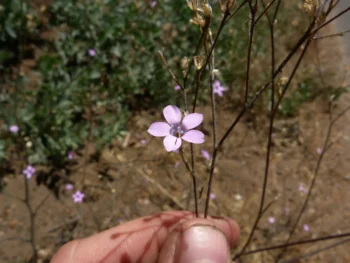
Splendid Woodland-Gilia: A Delicate California Native Worth Protecting
Meet the splendid woodland-gilia (Saltugilia splendens), a charming little California native that’s as lovely as its name suggests. This delicate annual wildflower might not be the showiest plant in your garden, but it plays an important role in California’s natural ecosystems and deserves a spot in native plant gardens.
What Makes This Plant Special
The splendid woodland-gilia is a true California endemic, meaning it naturally occurs nowhere else in the world. This herbaceous annual belongs to the phlox family and produces clusters of tiny, star-shaped flowers that range from white to pale pink. While individual blooms are small, they create a delicate, airy effect that adds subtle beauty to woodland settings.
As an annual forb, this plant completes its entire life cycle in one growing season, typically germinating with fall rains, growing through winter and spring, flowering in late spring to early summer, then setting seed before the dry California summer arrives.
Where It Grows Naturally
Splendid woodland-gilia is found exclusively in California, where it inhabits woodland and chaparral communities. You’ll typically find it growing in the understory of oak woodlands and mixed evergreen forests, where it enjoys dappled sunlight and protection from the intense summer sun.
- Species observed
- No observations
Conservation Considerations
Here’s something important to know: this lovely native has a Global Conservation Status of S3?, which indicates its conservation status is somewhat uncertain but potentially of concern. This means if you’re interested in growing splendid woodland-gilia, it’s crucial to source seeds or plants only from reputable native plant nurseries that collect responsibly and legally.
By growing this species in appropriate garden settings, you’re actually contributing to its conservation while supporting local wildlife.
Garden Performance and Design Role
In the garden, splendid woodland-gilia works beautifully as:
- An understory plant in native woodland gardens
- A naturalizing element in California native landscapes
- Part of a diverse wildflower mix for shaded areas
- A subtle accent plant that won’t overpower showier natives
This plant thrives in USDA hardiness zones 8-10, making it suitable for most of California’s Mediterranean climate regions.
Growing Conditions
To successfully grow splendid woodland-gilia, provide:
- Partial shade to filtered sunlight
- Well-draining soil that doesn’t stay soggy
- Moderate moisture during the growing season
- Protection from harsh afternoon sun
The plant naturally adapted to California’s wet winter/dry summer pattern, so avoid overwatering during summer dormancy.
Planting and Care Tips
The best time to start splendid woodland-gilia is from seed sown in fall, mimicking natural conditions. Here’s how:
- Scatter seeds on prepared soil surface in October or November
- Lightly rake to ensure good seed-to-soil contact
- Water gently and maintain consistent moisture through winter
- Allow plants to self-seed for naturalizing effect
- Minimal fertilization needed – these plants prefer lean soils
Wildlife and Pollinator Benefits
Though small, the flowers of splendid woodland-gilia attract various beneficial insects, including native bees, small butterflies, and other pollinators. The seeds also provide food for small birds and contribute to the complex web of interactions that make California’s native ecosystems so special.
Is This Plant Right for Your Garden?
Choose splendid woodland-gilia if you:
- Have a woodland garden or shaded native landscape
- Want to support California’s native plant diversity
- Appreciate subtle, naturalistic beauty over flashy displays
- Are committed to sourcing plants responsibly
- Enjoy watching small pollinators and beneficial insects
Remember, when you plant California natives like splendid woodland-gilia, you’re not just adding beauty to your garden—you’re participating in conservation efforts and supporting the wildlife that depends on these specialized relationships developed over thousands of years.
Just be sure to source your plants or seeds from reputable suppliers who collect sustainably, helping ensure this splendid little native continues to grace California’s woodlands for generations to come.