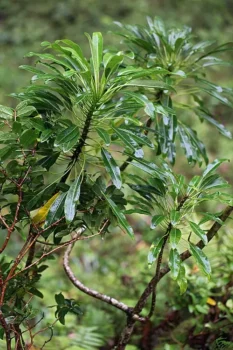
Growing Spoonleaf Cyanea: A Rare Hawaiian Treasure for Your Garden
If you’re drawn to unique native plants with a story to tell, the spoonleaf cyanea (Cyanea kahiliensis) might just capture your heart. This distinctive Hawaiian native brings both beauty and conservation significance to the right garden setting, though it’s definitely not your typical backyard shrub.
What Makes Spoonleaf Cyanea Special?
The spoonleaf cyanea is a perennial shrub that’s part of Hawaii’s incredible native flora. True to its name, this plant features distinctive spoon-shaped leaves that give it an almost architectural quality in the landscape. When it blooms, you’ll be treated to curved, tubular flowers in shades of purple or blue that seem almost too exotic to be real.
This multi-stemmed woody plant typically stays under 13-16 feet tall, making it a manageable size for most garden spaces. As a member of the bellflower family, it brings a unique tropical aesthetic that’s hard to replicate with non-native alternatives.
Where Does It Come From?
Cyanea kahiliensis is endemic to Hawaii, meaning you won’t find it growing wild anywhere else on Earth. Specifically, this rare beauty calls the Big Island of Hawaii home, where it naturally grows in the cool, misty montane wet forests.
- Species observed
- No observations
A Conservation Concern
Important note for potential growers: The spoonleaf cyanea is classified as imperiled, with only 6-20 known occurrences and an estimated 1,000-3,000 individuals remaining in the wild. If you’re interested in growing this plant, it’s crucial to source it only from reputable native plant nurseries that propagate from ethically collected seeds or cuttings. Never collect from wild populations.
Is Spoonleaf Cyanea Right for Your Garden?
This isn’t a plant for everyone, but it could be perfect if you:
- Live in USDA zones 10-11 (tropical and subtropical regions)
- Want to support Hawaiian native plant conservation
- Have a shaded, humid garden space
- Enjoy unique, conversation-starting plants
- Are creating a native Hawaiian landscape
Growing Conditions and Care
Think cool, misty Hawaiian cloud forest, and you’ll understand what this plant craves. Spoonleaf cyanea needs:
- Light: Partial to full shade – direct sun is generally too harsh
- Moisture: Consistent humidity and well-draining, moist soil
- Temperature: Cool, stable temperatures without extreme heat
- Soil: Rich, organic, well-draining soil that mimics forest floor conditions
This plant is quite particular about its growing conditions and won’t tolerate drought, extreme heat, or poor drainage. It’s definitely more of a specialty plant than a low-maintenance garden staple.
Wildlife and Pollinator Benefits
In its native habitat, spoonleaf cyanea’s curved flowers are perfectly designed for bird pollination, particularly by Hawaiian honeycreepers. While these specialized native birds might not visit your garden, the unique flower structure still provides an interesting talking point about plant-animal relationships.
Landscape Design Ideas
Spoonleaf cyanea works beautifully as:
- A specimen plant in native Hawaiian gardens
- Part of a shade garden with other Hawaiian natives
- An understory plant in forest-style landscapes
- A conservation garden centerpiece
The Bottom Line
Growing spoonleaf cyanea is more than just gardening—it’s participating in conservation. This rare Hawaiian native offers unique beauty and the satisfaction of helping preserve an endangered species, but only if you can provide the specific conditions it needs and source it responsibly.
If you’re up for the challenge and have the right growing conditions, this remarkable plant can be a meaningful addition to your garden. Just remember: with great rarity comes great responsibility!