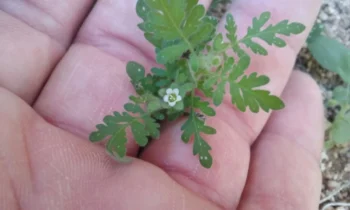
Spotted Hideseed: A Delicate Desert Native Worth Discovering
Meet spotted hideseed (Eucrypta chrysanthemifolia var. bipinnatifida), a charming little annual that’s quietly making its mark in southwestern desert gardens. This native forb might not be the showiest plant in your garden, but what it lacks in size, it makes up for in ecological value and understated beauty.
What Makes Spotted Hideseed Special?
Spotted hideseed is a true southwestern native, naturally occurring across Arizona, California, and Nevada. As an annual forb, it completes its entire life cycle in just one growing season, but don’t let that fool you into thinking it’s not worth your attention. This little plant packs a lot of charm into its compact frame.
The plant gets its common name from its distinctive appearance – small spotted or mottled patterns often appear on its delicate, fern-like leaves that are deeply divided and bipinnate (twice-divided). Its botanical name, Eucrypta chrysanthemifolia, hints at its chrysanthemum-like foliage, though it’s much more delicate and intricate.
- Species observed
- No observations
Garden Appeal and Landscape Role
While spotted hideseed won’t dominate your landscape, it serves as an excellent supporting player in desert and xeriscape gardens. Its low-growing, spreading habit makes it perfect for:
- Rock gardens and crevice plantings
- Native wildflower meadows
- Desert landscaping as understory groundcover
- Xeriscapes where you want subtle texture
The small white to pale blue flowers appear in delicate clusters, creating a gentle carpet effect when planted in groups. Though individual blooms are tiny, they’re perfectly proportioned to the plant’s overall delicate appearance.
Pollinator and Wildlife Benefits
Don’t underestimate this little plant’s ecological importance! Spotted hideseed is a valuable pollinator plant, attracting small native bees, beneficial flies, and other tiny pollinators that are often overlooked but crucial to desert ecosystems. These smaller pollinators are essential for many other native plants, making spotted hideseed a true team player in your native garden.
Growing Conditions and Care
Spotted hideseed thrives in USDA hardiness zones 8-11, making it suitable for warm desert regions. Here’s what this desert native needs to flourish:
- Sunlight: Full sun exposure
- Soil: Well-draining sandy or rocky soils – heavy clay will spell disaster
- Water: Drought tolerant once established, but benefits from occasional deep watering during dry spells
- Fertilizer: None needed – like most desert natives, it prefers lean soil
Planting and Propagation Tips
Since spotted hideseed is an annual, you’ll need to replant it each year or allow it to self-seed. Here’s how to get the best results:
- Direct seed in fall for spring blooms
- Scatter seeds on prepared soil surface – don’t bury them deeply
- Water gently until germination occurs
- Thin seedlings if they come up too thickly
- Allow some plants to go to seed if you want them to return next year
A Word About Conservation
Spotted hideseed has a somewhat uncertain conservation status, which means we should be mindful about how we source our seeds. Always purchase seeds from reputable native plant nurseries that practice ethical collection methods, or better yet, collect seeds responsibly from existing garden plants rather than wild populations.
Is Spotted Hideseed Right for Your Garden?
This delicate native is perfect for gardeners who appreciate subtlety and want to support local ecosystems. It’s ideal if you’re creating a desert garden, rock garden, or native plant landscape in the appropriate climate zones. However, it might not be the best choice if you’re looking for bold, showy flowers or if you live outside its native range.
Consider spotted hideseed if you want to create habitat for small pollinators, add fine texture to your landscape, or simply grow something truly native to the American Southwest. While it may be small, it’s a wonderful way to connect your garden to the broader desert ecosystem.