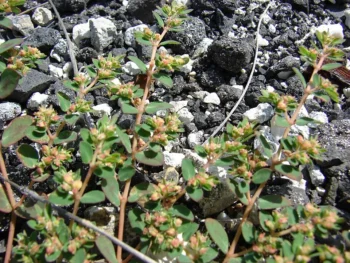
Spotted Sandmat: A Tiny Native Treasure Worth Protecting
If you’ve ever wondered about those tiny, mat-forming plants that pop up in sandy, disturbed areas, you might have encountered spotted sandmat (Chamaesyce maculata). This diminutive native annual has a story that’s both fascinating and concerning for anyone interested in native plant conservation.
What is Spotted Sandmat?
Spotted sandmat is a small, prostrate annual forb that belongs to the spurge family. True to its name, this little plant forms low-growing mats with distinctive reddish-spotted leaves that give it its common moniker. Don’t let its size fool you – this hardy annual has adapted to thrive in some pretty tough conditions.
You might also see this plant listed under several scientific synonyms, including Euphorbia maculata, Euphorbia supina, or Chamaesyce supina, as botanical classifications have evolved over time.
Where Does Spotted Sandmat Call Home?
Spotted sandmat is native to the lower 48 United States, where it naturally occurs across a remarkably wide range. You can find populations from Alabama to Wyoming, and from Maine to California. It has also established itself in several Canadian provinces and other regions, though it’s considered non-native in those areas.
- Species observed
- No observations
A Plant in Peril: Understanding Its Rarity
Here’s where things get serious: Despite its wide historical distribution, spotted sandmat currently has a Global Conservation Status of S1, meaning it’s critically imperiled. With typically only five or fewer occurrences and very few remaining individuals (less than 1,000), this little plant is in real trouble.
If you’re considering adding spotted sandmat to your garden, it’s crucial to source seeds or plants only from reputable native plant nurseries that use responsibly collected, locally-sourced genetic material. Never collect from wild populations.
Garden Appeal and Landscape Role
While spotted sandmat might not win any beauty contests, it has its own subtle charm and important ecological value:
- Forms attractive, low-growing mats perfect for rock gardens or naturalized areas
- Tiny flowers attract small pollinators like flies and ants
- Excellent for wildlife gardens focused on supporting native ecosystems
- Ideal for xeriscaping and low-maintenance landscapes
- Works well as a living mulch or ground cover in appropriate settings
Growing Conditions and Care
Spotted sandmat is remarkably adaptable and low-maintenance once you understand its preferences:
Sunlight: Thrives in full sun conditions
Soil: Prefers well-drained, sandy, or gravelly soils. It’s particularly fond of disturbed areas and doesn’t mind poor soil conditions.
Water: Highly drought tolerant once established. In fact, too much water can be detrimental.
Hardiness: As an annual, it can grow in USDA zones 2-11, completing its entire life cycle in one growing season.
Wetland Considerations
Spotted sandmat generally prefers upland conditions and rarely occurs in wetlands. Depending on your region, it’s classified as either Obligate Upland or Facultative Upland, meaning it strongly prefers dry to moderately moist conditions rather than consistently wet areas.
Planting and Care Tips
- Sow seeds directly in spring after the last frost
- Barely cover seeds with soil – they need light to germinate
- Water gently until established, then reduce watering
- Allow plants to self-seed for natural population maintenance
- Avoid fertilizing – rich soils can actually harm this species
- Consider it for areas where other plants struggle to grow
The Conservation Imperative
Growing spotted sandmat isn’t just about adding another native plant to your garden – it’s about participating in conservation. With its critically imperiled status, every responsibly grown plant contributes to preserving this species for future generations.
If you can’t locate responsibly sourced spotted sandmat, consider other native ground covers appropriate for your region. Your local native plant society or extension office can suggest alternatives that provide similar ecological benefits without conservation concerns.
Final Thoughts
Spotted sandmat might be small, but its conservation story is mighty. By choosing to grow this rare native with responsibly sourced material, you’re not just creating habitat – you’re becoming a steward of North America’s botanical heritage. Sometimes the most important plants aren’t the showiest ones, but rather the quiet survivors that need our help the most.