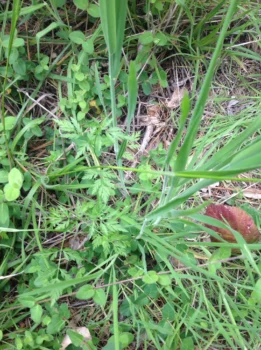
Spreading Hedgeparsley: An Invasive Plant to Avoid in Your Garden
If you’ve spotted delicate white flowers clustered in umbrella-like formations along roadsides or field edges, you might be looking at spreading hedgeparsley (Torilis arvensis). While this annual forb might seem harmless with its feathery foliage and tiny white blooms, don’t let its delicate appearance fool you – this is one plant you definitely don’t want establishing itself in your garden.
What is Spreading Hedgeparsley?
Spreading hedgeparsley is an annual forb, meaning it’s a non-woody plant that completes its entire life cycle in one growing season. Originally native to Europe and western Asia, this plant has made itself quite at home across North America, and not in a good way.
As a forb, spreading hedgeparsley lacks significant woody tissue and produces new growth from buds at or below ground level each year. It typically grows 1-4 feet tall with fernlike, finely divided leaves and produces small white flowers arranged in characteristic umbrella-shaped clusters called umbels.
Where You’ll Find It (Unfortunately)
This invasive species has spread extensively across North America and can now be found in numerous states including Alabama, Arkansas, California, Florida, Georgia, Idaho, Illinois, Indiana, Iowa, Kansas, Kentucky, Louisiana, Maryland, Mississippi, Missouri, Nebraska, New Jersey, New York, North Carolina, Ohio, Oklahoma, Oregon, Pennsylvania, South Carolina, Tennessee, Texas, Utah, Virginia, Washington, and West Virginia. It’s also present in British Columbia, Canada, where it’s actually considered native.
- Species observed
- No observations
Why You Should Avoid This Plant
Here’s the important part: spreading hedgeparsley is classified as invasive in several areas. In Wisconsin, it has a Prohibited invasive status, which means it’s considered particularly problematic. This non-native species reproduces spontaneously in the wild without human assistance and tends to persist and spread, potentially crowding out native plants that local wildlife depends on.
The wildlife benefits of this plant are minimal at best. Research shows that large animals use it for only 2-5% of their diet and rarely use it for cover, making it a poor choice compared to native alternatives that provide much better support for local ecosystems.
Native Alternatives to Consider Instead
Rather than risking the introduction or spread of spreading hedgeparsley, consider these native alternatives that provide similar delicate white flowers and support local wildlife:
- Wild carrot (Daucus carota) – though also non-native in some areas, check local status
- Native members of the carrot family (Apiaceae) appropriate to your region
- Local native wildflowers with umbrella-like flower clusters
If You Spot It in Your Garden
If you discover spreading hedgeparsley in your garden, the best approach is removal, especially before it sets seed. Since it’s an annual, preventing seed production can help control its spread. Always check with your local extension office or native plant society for the best removal and disposal methods in your area.
Remember, the goal of native gardening is to support local ecosystems and wildlife. By choosing native plants over invasive species like spreading hedgeparsley, you’re creating a garden that truly benefits the environment around you.