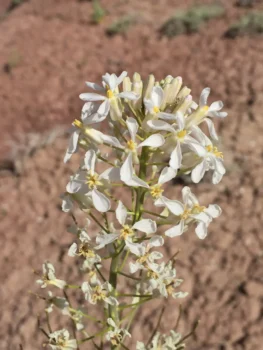
Spreading Thelypodiopsis: A Rare Utah Native Worth Protecting
If you’re a native plant enthusiast looking for something truly unique, you might have stumbled across spreading thelypodiopsis (Thelypodiopsis divaricata). But before you start planning where to plant it, there are some important things you should know about this rare Utah native.
What is Spreading Thelypodiopsis?
Spreading thelypodiopsis belongs to the mustard family and is classified as a forb – basically a non-woody plant that dies back to the ground each year. This annual to biennial plant is part of the native flora of the American West, though you won’t find it growing wild in many places.
You might occasionally see this plant listed under its botanical synonym, Caulanthus divaricatus, in older references, but Thelypodiopsis divaricata is the accepted name today.
Where Does It Grow?
Here’s where things get interesting – and a bit concerning. Spreading thelypodiopsis is native to the lower 48 states, but its current range is extremely limited. Today, you’ll only find it growing naturally in Utah, making it one of those special plants that truly belongs to a specific place.
- Species observed
- No observations
Why the Caution?
Before you get too excited about adding this plant to your garden, you need to know that spreading thelypodiopsis has a Global Conservation Status of S3, which means it’s considered vulnerable. In plain English, this means:
- It’s very rare and local throughout its range
- There are typically only 21 to 100 known occurrences
- The total population is estimated between 3,000 and 10,000 individuals
- Various factors make it vulnerable to disappearing entirely
This rarity status is a big red flag for responsible gardeners. While we don’t have enough information to call it invasive or noxious, its vulnerable status means we need to treat it with extra care.
Should You Grow It?
Here’s the honest truth: if you’re determined to grow spreading thelypodiopsis, you absolutely must source it responsibly. This means:
- Never collecting seeds or plants from wild populations
- Only purchasing from reputable native plant nurseries that grow from ethically sourced stock
- Considering whether your garden efforts might be better focused on more common native species
Unfortunately, there’s very little information available about how to successfully grow this species in cultivation. We don’t know its preferred growing conditions, USDA hardiness zones, or specific care requirements. This lack of cultivation information makes it a challenging choice even for experienced native plant gardeners.
Better Alternatives
Given the rarity of spreading thelypodiopsis and the limited cultivation information, you might want to consider other native Utah mustard family plants that can provide similar ecological benefits without the conservation concerns. Many other native forbs can fill similar roles in native plant gardens while being more readily available and better understood.
The Bottom Line
Spreading thelypodiopsis represents one of those plants that’s more important in its wild habitat than in our gardens. While there’s something romantic about growing rare natives, sometimes the most responsible thing we can do is appreciate them in their natural settings and focus our garden efforts on species that won’t put additional pressure on vulnerable populations.
If you do encounter this plant in the wild during your Utah adventures, take photos and enjoy the moment – you’re seeing something truly special that deserves our protection and respect.