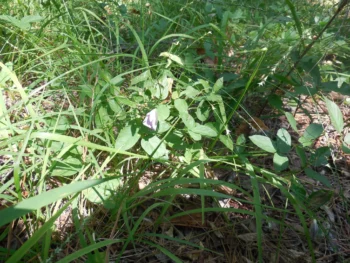
Spurred Butterfly Pea: A Native Gem for Wildlife-Friendly Gardens
Meet the spurred butterfly pea (Centrosema virginianum), a delightful native wildflower that’s been quietly winning hearts across the southeastern United States. This charming perennial herb might not be the showiest plant in your garden, but it packs a serious punch when it comes to supporting local wildlife and adding subtle beauty to naturalized spaces.
What Makes Spurred Butterfly Pea Special
Don’t let the name fool you – while it’s called a pea, this lovely native is actually a member of the legume family that produces gorgeous butterfly-shaped flowers in shades of purple and pink. As a forb (that’s garden-speak for a non-woody flowering plant), it grows as a trailing, somewhat vine-like perennial that can spread along the ground or climb up through other vegetation.
The spurred butterfly pea goes by its scientific name Centrosema virginianum, and you might occasionally see it listed under some older botanical synonyms like Bradburya virginiana. But regardless of what name you know it by, this plant is a true native treasure.
Where Does It Call Home?
This native beauty has quite an impressive range across the southeastern and mid-Atlantic United States. You’ll find wild populations thriving in Alabama, Arkansas, Delaware, Florida, Georgia, Illinois, Kentucky, Louisiana, Maryland, Mississippi, Missouri, New Jersey, North Carolina, Oklahoma, South Carolina, Tennessee, Texas, and Virginia. It’s also native to Puerto Rico and the U.S. Virgin Islands.
- Species observed
- No observations
Important note for New Jersey gardeners: Spurred butterfly pea is listed as endangered in the Garden State, so if you’re lucky enough to live there and want to grow this beauty, make sure you source your plants or seeds from reputable native plant nurseries – never collect from wild populations.
Why Your Garden (and Local Wildlife) Will Love It
Here’s where spurred butterfly pea really shines: it’s a wildlife magnet! Research shows that this plant provides a significant food source for both large animals and terrestrial birds, making up 10-25% of their diet. It also offers occasional cover for various creatures seeking shelter.
The butterfly-shaped flowers are particularly attractive to pollinators, including butterflies (naturally!), bees, and other beneficial insects. Since it’s a legume, it also has the bonus superpower of fixing nitrogen in the soil, potentially benefiting neighboring plants.
Perfect Spots for Planting
Spurred butterfly pea is ideal for:
- Native wildflower gardens
- Wildlife habitat restoration areas
- Natural groundcover in less formal landscapes
- Pollinator gardens
- Areas where you want low-maintenance, spreading coverage
This isn’t the plant for formal, manicured garden beds, but it’s absolutely perfect for naturalized areas where you want to support local ecosystems while enjoying subtle, native beauty.
Growing Spurred Butterfly Pea Successfully
Good news for busy gardeners: spurred butterfly pea is refreshingly low-maintenance! It thrives in USDA hardiness zones 6-9, making it suitable for most of its native range.
Growing conditions:
- Sunlight: Full sun to partial shade (quite adaptable!)
- Soil: Well-drained soils; not too picky about soil type
- Water: Drought tolerant once established, though regular watering helps during the first growing season
- Maintenance: Very low – this plant pretty much takes care of itself
Planting and Care Tips
Getting started with spurred butterfly pea is fairly straightforward:
Planting: You can start from seed or transplants. If using seeds, scarification (lightly scratching the seed coat) can improve germination rates – this is common with legume family plants.
Establishment: Provide regular water during the first growing season to help plants establish strong root systems. After that, they should handle most weather conditions on their own.
Ongoing care: Minimal intervention needed! The plant may self-seed in favorable conditions, which is great for naturalizing areas but something to consider if you prefer more controlled growth.
The Bottom Line
Spurred butterfly pea might not win any most dramatic garden plant awards, but it’s a champion when it comes to supporting native wildlife while requiring minimal care from you. If you’re looking to create habitat, support pollinators, or add authentic native character to naturalized areas of your landscape, this unassuming beauty deserves serious consideration.
Just remember: if you’re in New Jersey, source responsibly due to its endangered status there. For gardeners elsewhere in its native range, spurred butterfly pea offers an easy way to garden with nature rather than against it – and your local wildlife will definitely thank you for it!