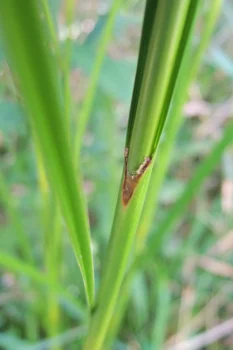
Stalked Bulrush: A Hidden Gem for Wetland Gardens
If you’re looking to create a naturalistic wetland garden or need a reliable plant for that perpetually soggy spot in your yard, stalked bulrush (Scirpus pedicellatus) might just be your new best friend. This unassuming native sedge may not win any beauty contests, but it’s a workhorse when it comes to thriving in wet conditions where other plants fear to tread.
What is Stalked Bulrush?
Stalked bulrush is a perennial sedge native to eastern North America. Don’t let the name fool you – despite being called a bulrush, it’s actually a member of the sedge family, not a true rush. This grass-like plant forms neat clumps and can reach up to 6.6 feet tall when happy, making it a substantial presence in the landscape.
You might also encounter this plant under its scientific synonyms, including Scirpus cyperinus var. pedicellatus, though botanists have been shuffling names around for decades – such is the life of plant taxonomy!
Where Does It Grow Naturally?
This adaptable sedge calls a surprisingly large chunk of eastern North America home, stretching from southeastern Canada down through the northeastern United States. You’ll find it growing wild in states from Maine to Missouri, and from Ontario to New Jersey. It’s particularly fond of the cooler climates in places like New Brunswick, Nova Scotia, Quebec, and the northern tier of U.S. states.
- Species observed
- No observations
A Word of Caution: Rarity Status
Here’s where things get interesting – and important. While stalked bulrush has a relatively wide natural range, it’s actually quite rare in some areas. In New Jersey, it’s listed as endangered and receives special protection in both the Pinelands and Highlands regions. If you’re considering adding this plant to your garden, please make sure you source it responsibly from reputable native plant nurseries rather than collecting from the wild.
Why Grow Stalked Bulrush?
Let’s be honest – stalked bulrush isn’t going to stop traffic with its stunning blooms. Its green flowers are small and inconspicuous, blooming in summer and giving way to brown seeds. But sometimes the best garden plants are the quiet ones that do their job without demanding constant attention.
Here’s why this humble sedge deserves a spot in the right garden:
- Wetland specialist: This plant is classified as obligate wetland across its entire range, meaning it almost always occurs in wetlands naturally
- Erosion control: Those roots go down at least 12 inches and help stabilize wet soils
- Low maintenance: Once established, it pretty much takes care of itself
- Long-lived: This is a perennial that’s in it for the long haul
- Native habitat value: Provides cover and nesting material for wildlife
Perfect Garden Settings
Stalked bulrush isn’t for every garden, but in the right spot, it’s absolutely perfect. Consider it for:
- Rain gardens and bioswales
- Pond and stream margins
- Wetland restoration projects
- Naturalized areas that stay consistently moist
- Areas prone to seasonal flooding
This sedge works beautifully in informal, naturalistic designs rather than formal garden settings. Think prairie-style plantings and wildlife habitat gardens rather than manicured perennial borders.
Growing Conditions
The good news about stalked bulrush is that if you can meet its basic needs, it’s pretty easygoing. Here’s what it requires:
- Moisture: High water needs – this plant loves consistently wet to flooded conditions
- Soil: Adaptable to fine and medium-textured soils; not picky about fertility
- pH: Tolerates a wide range from 4.0 to 8.0
- Sun: Shade intolerant – needs full sun to perform well
- Temperature: Hardy to at least -28°F, suitable for USDA zones 3-7
- Drainage: Ironically for a wetland plant, it has low drought tolerance
Planting and Care Tips
Getting stalked bulrush established is straightforward if you remember it’s a wetland plant first and foremost:
- Timing: Plant in spring during the active growing season
- Propagation: Grows readily from seed or can be propagated by sprigs
- Spacing: Plant 3,450 to 4,800 plants per acre for restoration projects
- Establishment: Keep consistently moist until established; seedling vigor is moderate
- Maintenance: Minimal once established – this is a plant it and forget it species
Seeds are produced in medium abundance and persist well, though they spread slowly on their own. The plant has a moderate growth rate and forms attractive bunching clumps rather than spreading aggressively.
What About Wildlife and Pollinators?
While stalked bulrush won’t attract clouds of butterflies like a native wildflower might, it does provide valuable habitat structure. Sedges like this one offer nesting sites and cover for various wildlife species, and the seeds provide food for waterfowl and other birds. As a wind-pollinated plant, it doesn’t rely on insect pollinators, but it’s part of the complex web of native plant communities that support overall ecosystem health.
The Bottom Line
Stalked bulrush might not be the star of your garden, but if you have wet areas that need attention, it’s a reliable native option that asks for very little once established. Just remember to source your plants responsibly given its endangered status in some areas. This is one of those plants that proves sometimes the most valuable garden additions are the ones that quietly do their job without fanfare – stabilizing soil, providing habitat, and adding authentic native character to wetland gardens.
If you’re working on a rain garden, pond margin, or wetland restoration project in its native range, stalked bulrush deserves serious consideration. It’s proof that not every garden hero needs showy flowers to earn its keep.