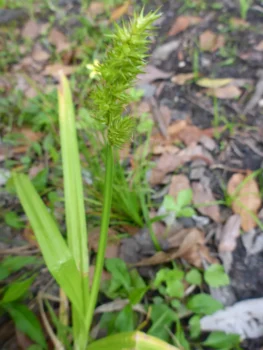
Stalkgrain Sedge: A Rare Native Treasure Worth Protecting
If you’re passionate about native plants and conservation, you’ve likely encountered some pretty special species in your gardening journey. Today, let’s talk about one that’s both fascinating and incredibly rare: the stalkgrain sedge, scientifically known as Carex stipata var. maxima. This isn’t your everyday garden center find – it’s a conservation priority that deserves our attention and respect.
What Makes Stalkgrain Sedge Special?
Stalkgrain sedge is a perennial member of the sedge family (Cyperaceae), those grass-like plants that often get mistaken for true grasses but have their own unique charm. As a native species to the lower 48 states, this plant has been quietly doing its ecological work across eastern and southeastern regions for countless years.
You might also see this plant referenced by its synonyms in older literature: Carex stipata var. uberior or Carex uberior. But regardless of what name you encounter, you’re looking at the same remarkable species.
Where Does It Call Home?
Stalkgrain sedge has a fairly broad natural range across the eastern United States, including:
- Alabama, Delaware, and the District of Columbia
- Florida, Georgia, Illinois, and Indiana
- Kentucky, Louisiana, Maryland, and Mississippi
- Missouri, New Jersey, North Carolina, and Ohio
- Pennsylvania, South Carolina, Virginia, and West Virginia
Despite this seemingly wide distribution, don’t let the long list fool you – this sedge is anything but common.
- Species observed
- No observations
The Conservation Reality
Here’s where things get serious: stalkgrain sedge is listed as endangered in New Jersey, with a rarity ranking of S1. This designation means it’s critically imperiled in the state, with very few known occurrences. In New Jersey, it’s also specifically listed for protection in both the Pinelands and Highlands regions.
This rarity status should give every native plant enthusiast pause. While we don’t have complete data on its status across its entire range, the New Jersey designation suggests this variety faces significant conservation challenges.
Should You Grow Stalkgrain Sedge?
The short answer is: maybe, but with extreme caution and responsibility. If you’re interested in growing this rare native sedge, here are the non-negotiables:
- Source responsibly: Never collect from wild populations. Only purchase from reputable native plant nurseries that propagate from legally and ethically obtained seeds or divisions.
- Verify legality: Check local regulations – collecting this species from the wild may be illegal in some areas.
- Consider alternatives: Other Carex species might provide similar ecological benefits without the conservation concerns.
- Support conservation: Consider donating to organizations working to protect rare plant habitats instead of or in addition to growing the plant.
The Growing Reality
Unfortunately, specific growing information for Carex stipata var. maxima is limited in readily available sources. This lack of cultivation knowledge is partly due to its rarity – there simply aren’t many gardeners growing it, and research focuses more on conservation than cultivation.
What we can reasonably assume, based on its sedge family membership and native range, is that it likely prefers:
- Moist to wet conditions (typical of most sedges)
- Partial to full sun exposure
- Natural, undisturbed soil conditions
However, without specific cultivation trials and documentation, these are educated guesses rather than proven growing requirements.
The Bigger Picture
Sometimes the most important thing we can do for a rare native plant isn’t to grow it in our gardens, but to protect its wild habitats and support conservation efforts. Stalkgrain sedge serves as a reminder that our native flora includes species hanging on by a thread, deserving of our respect and protection rather than our casual cultivation attempts.
If you’re passionate about supporting rare native plants, consider volunteering with local native plant societies, supporting habitat restoration projects, or focusing your garden efforts on more readily available native species that can provide similar ecological functions without conservation risks.
After all, the best way to honor a rare plant might just be to let it be rare – and wild – while we work to ensure it stays that way for future generations.