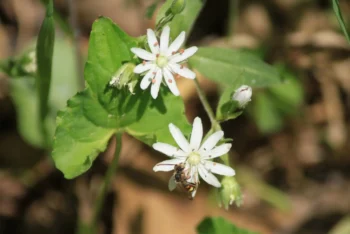
Star Chickweed: A Delicate Native Ground Cover Worth Protecting
If you’re looking for a charming native ground cover that brings subtle beauty to shaded corners of your garden, star chickweed (Stellaria pubera) might just be the hidden gem you’ve been searching for. This delicate perennial forb creates carpets of tiny white flowers that twinkle like stars against the woodland floor, making it a wonderful choice for naturalistic gardens.
What Makes Star Chickweed Special
Star chickweed is a native perennial that belongs to the carnation family. Don’t let the chickweed name fool you into thinking it’s a common weed – this plant is actually quite special and increasingly rare in some areas. The botanical name Stellaria pubera literally means hairy little star, referring to its distinctive star-shaped flowers and fuzzy stems.
As a forb (a non-woody flowering plant), star chickweed grows low to the ground and spreads gently through underground rhizomes, creating natural drifts over time. Its small white flowers bloom in early spring, each featuring five deeply notched petals that give them their characteristic star appearance.
Where Star Chickweed Calls Home
This native beauty has quite an impressive range across the eastern United States. You’ll find star chickweed naturally growing from Alabama all the way up to Massachusetts, and from the Atlantic coast west to states like Illinois, Minnesota, and Nebraska. It thrives in the rich, moist soils of deciduous woodlands, often carpeting forest floors in early spring before the tree canopy fills in.
- Species observed
- No observations
A Word of Caution: Conservation Matters
Here’s something important every gardener should know: star chickweed is considered endangered in New Jersey and is listed as a species of special concern in several other states. This means that while it’s a wonderful plant to grow, you should only source it from reputable native plant nurseries that propagate it ethically – never collect it from the wild.
By growing star chickweed in your garden, you’re actually helping to conserve this beautiful native species while creating habitat for local wildlife.
Perfect Growing Conditions
Star chickweed is happiest in conditions that mimic its natural woodland habitat. Here’s what this charming plant prefers:
- Light: Partial to full shade (perfect for those tricky shady spots!)
- Soil: Moist, well-draining, humus-rich soil
- Hardiness: USDA zones 3-8
- Moisture: Consistent moisture, but not waterlogged
The good news is that once established, star chickweed is quite low-maintenance. It naturally adapts to woodland conditions and doesn’t require fertilization if planted in rich, organic soil.
How to Successfully Grow Star Chickweed
Getting star chickweed established in your garden is relatively straightforward:
- Timing: Plant in fall or early spring when temperatures are cool
- Soil prep: Amend clay soils with compost to improve drainage
- Spacing: Allow 12-18 inches between plants for natural spreading
- Watering: Keep consistently moist during the first growing season
- Mulching: A light layer of leaf mold mimics natural conditions
Star Chickweed in Your Garden Design
This versatile native works beautifully in several garden settings:
- Woodland gardens: Perfect as a naturalistic ground cover under trees
- Shade gardens: Brightens dark corners with its cheerful white flowers
- Native plant gardens: Provides authentic local habitat
- Rock gardens: Softens edges in partially shaded rocky areas
Pair star chickweed with other native shade lovers like wild ginger, bloodroot, or native ferns for a truly authentic woodland feel.
Supporting Local Wildlife
While star chickweed might look delicate, it’s a valuable contributor to local ecosystems. Early-blooming flowers provide nectar for small native bees and flies when few other food sources are available. The plant also serves as a host for several native moth species, making it a small but important link in the local food web.
The Bottom Line
Star chickweed deserves a place in more native gardens, especially given its conservation status. This charming ground cover brings subtle beauty to shaded areas while supporting local wildlife and preserving our botanical heritage. Just remember to source plants responsibly from reputable nurseries, and you’ll be rewarded with years of delicate spring beauty that truly connects your garden to the local landscape.
With its low-maintenance nature and important ecological role, star chickweed proves that sometimes the most valuable garden plants are the quiet, unassuming ones that work behind the scenes to create beautiful, functional landscapes.