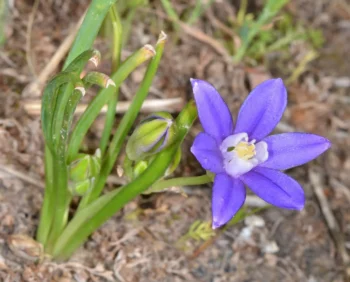
Starflower Brodiaea: A Rare California Native Worth Growing Responsibly
If you’re looking to add a touch of wild California beauty to your garden, the starflower brodiaea might just be the perfect choice. This charming native perennial brings delicate star-shaped blooms and supports local wildlife, but there’s an important caveat every responsible gardener should know about before planting.
What is Starflower Brodiaea?
Starflower brodiaea (Brodiaea stellaris) is a perennial bulbous plant that’s as lovely as it is rare. Standing 1-3 feet tall when in bloom, this California native produces clusters of stunning star-shaped flowers in shades of blue to purple during late spring and early summer. The rest of the year, you’ll see grass-like foliage that blends beautifully into naturalized plantings.
You might also encounter this plant listed under its synonym Hookera stellaris, but regardless of the name, you’re looking at the same special species.
Where Does It Grow Naturally?
This botanical gem is endemic to California, where it naturally occurs in the Sierra Nevada foothills and Central Valley regions. As a true California native, it’s perfectly adapted to the state’s Mediterranean climate patterns.
- Species observed
- No observations
A Word About Rarity
Important note for responsible gardeners: Starflower brodiaea has a Global Conservation Status of S1S3, meaning it’s considered rare and potentially vulnerable. If you choose to grow this beauty, please ensure you source your bulbs from reputable native plant nurseries that propagate their own stock rather than wild-collecting. Never dig plants from the wild!
Why Grow Starflower Brodiaea?
Despite its rarity in the wild, there are compelling reasons to include responsibly sourced starflower brodiaea in your garden:
- Native pollinator magnet: The nectar-rich flowers attract native bees, butterflies, and other beneficial insects
- Water-wise choice: Once established, it thrives with minimal summer water
- Seasonal beauty: Provides lovely spring color before going dormant for the hot summer months
- Low maintenance: Requires little care once properly established
- Conservation value: Growing it helps preserve genetic diversity of this rare species
Perfect Garden Settings
Starflower brodiaea shines in several garden styles:
- Native California gardens
- Mediterranean-style landscapes
- Rock gardens and naturalized areas
- Drought-tolerant plantings
- Wildflower meadows
Growing Conditions and Care
Success with starflower brodiaea comes from mimicking its natural habitat. Here’s what this California native needs to thrive:
Climate: Best suited for USDA hardiness zones 8-10, where it can experience the Mediterranean climate it evolved with.
Sunlight: Full sun to partial shade works well, though it tends to bloom best with good sun exposure.
Soil: Well-draining soil is absolutely essential. Heavy, clay soils that stay wet will likely kill the bulbs.
Water: This is where many gardeners go wrong. Starflower brodiaea needs winter moisture but must stay dry during its summer dormancy period. Think wet winters, dry summers – just like its native California habitat.
Planting and Care Tips
Getting starflower brodiaea established successfully requires following nature’s schedule:
- Plant timing: Set bulbs in the ground during fall, before the first rains
- Planting depth: Plant bulbs about 3 times their height deep
- Spacing: Allow 4-6 inches between bulbs for natural clustering
- Watering: Provide supplemental water during winter and spring growing season, then stop watering once foliage begins to yellow
- Summer care: Leave the area dry during dormancy – resist the urge to water!
- Fertilizing: Generally unnecessary; these plants evolved in relatively poor soils
Supporting Wildlife
One of the best reasons to grow starflower brodiaea is its value to local wildlife. The flowers provide important nectar sources for native pollinators during their blooming period, and the seeds may provide food for small birds and other creatures.
Is Starflower Brodiaea Right for Your Garden?
This lovely native is perfect for gardeners who:
- Live in Mediterranean climate zones (California, parts of the Southwest)
- Want to support native pollinators
- Appreciate seasonal gardens that change throughout the year
- Are committed to responsible sourcing of rare plants
- Enjoy low-water gardening
However, it might not be the best choice if you live outside its natural climate range, prefer year-round foliage, or tend to overwater your garden during summer months.
The Bottom Line
Starflower brodiaea offers a wonderful opportunity to grow a truly special California native while supporting conservation efforts. Just remember to source your bulbs responsibly from reputable native plant nurseries, respect its need for summer dormancy, and enjoy the brief but beautiful spring show this rare gem provides. When grown thoughtfully, it’s a perfect addition to water-wise, wildlife-friendly gardens in the right climate zones.